Food & Wine: Lemony squid ink tagliatelle with shrimp | Whispering Angel Rosé
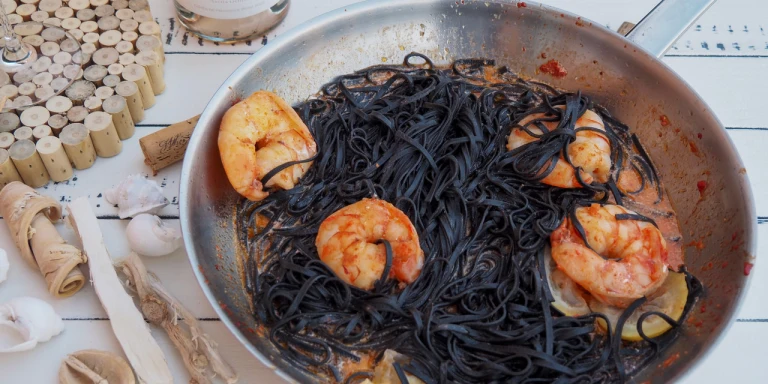
You have a plate of black tagliatelle, pink shrimp, and bright lemon in front of you. The question is not whether to open a bottle of rosé. The question is which rosé will hold its ground against briny squid ink and acidic citrus. This article makes the case that Whispering Angel Rosé, from Château d’Esclans in Provence, is the legally defensible answer. We will walk through the recipe, the wine science, and the practical execution so you can replicate this pairing at home without second-guessing.
Why Squid Ink Pasta Demands a Specific Rosé
Squid ink is not a gimmick. It delivers a concentrated umami salinity that coats the tongue. Most red wines would clash. Most white wines would disappear. Rosé sits in the middle, but not all rosés are equal here.
The Chemistry of Ink and Acid
Squid ink contains melanin, enzymes, and trace minerals that create a savory, slightly metallic finish. Lemon juice cuts through that heaviness. The problem is that many rosés lack enough acidity to stand up to both the ink and the lemon. Whispering Angel clocks in at a pH of roughly 3.2 to 3.4, which is significantly more acidic than the average Provence rosé (typically 3.5 to 3.7). That extra acidity acts like a palate cleanser between bites.
Why Not a White Wine
A crisp white like Sancerre or Assyrtiko could work in theory. But the shrimp in this dish are typically sautéed in olive oil and garlic, which adds a fatty component. Rosé has just enough tannin structure from brief skin contact—usually 2 to 6 hours for Whispering Angel—to bind with the oil and protein. A white wine lacks that structure. The result is a disjointed mouthfeel.
Whispering Angel is not the cheapest rosé on the shelf. It retails around $22 to $28 per bottle depending on your state. But for this specific dish, it is the right tool. The wine is made from Grenache, Cinsault, and Syrah grapes grown on limestone and clay soils in the Côtes de Provence appellation. The 2026 vintage, which is widely available in 2026, shows notes of white peach, pink grapefruit, and a faint herbal finish that mirrors the parsley in the recipe.
The Recipe: Lemony Squid Ink Tagliatelle with Shrimp
This serves four people. Total active time is about 30 minutes. You will need a large skillet, a pot for pasta, and a microplane or zester.
| Ingredient | Quantity | Notes |
|---|---|---|
| Squid ink tagliatelle | 400g (14 oz) | De Cecco or Rustichella d’Abruzzo; fresh or dried both work |
| Large shrimp (21-25 count) | 450g (1 lb) | Peeled and deveined, tails on or off as you prefer |
| Lemons | 2 whole | Zest and juice; one for the sauce, one for finishing |
| Garlic | 4 cloves | Thinly sliced, not minced |
| Extra-virgin olive oil | 60ml (¼ cup) | Use something fruity, not peppery; California Olive Ranch works |
| Unsalted butter | 30g (2 tbsp) | Cold, cut into small cubes |
| Fresh parsley | ¼ cup chopped | Flat-leaf only |
| Salt and red pepper flakes | To taste | Go light on salt because shrimp and ink are already salty |
Step-by-Step Execution
1. Cook the pasta. Bring a large pot of water to a rolling boil. Salt it generously—about 2 tablespoons of kosher salt per gallon. Drop the tagliatelle and cook until al dente. For dried pasta, that is typically 7 to 9 minutes. Reserve 1 cup of pasta water before draining. Do not rinse the pasta. The starch on the surface helps the sauce cling.
2. Sear the shrimp. While the pasta cooks, heat a large skillet over medium-high heat. Add 2 tablespoons of olive oil. Pat the shrimp dry with paper towels—wet shrimp will steam, not sear. Season them lightly with salt and a pinch of red pepper flakes. Cook the shrimp for 90 seconds per side. They should be pink and slightly charred at the edges. Transfer them to a plate. Do not wipe the skillet.
3. Build the sauce. Reduce the heat to medium. Add the remaining 2 tablespoons of olive oil and the sliced garlic. Cook for 45 seconds until fragrant but not brown. Add the zest of one lemon and the juice of both lemons. Stir and scrape up any browned bits from the shrimp. Let it bubble for 30 seconds. Add ½ cup of the reserved pasta water and bring to a simmer.
4. Finish the dish. Drop the drained pasta into the skillet. Toss it with tongs for 1 minute, letting the sauce emulsify. Add the cold butter cubes and toss until melted and glossy. The sauce should coat each strand of tagliatelle like a thin veil. If it seems dry, add more pasta water a tablespoon at a time. Return the shrimp to the skillet, toss once, and remove from heat. Top with parsley and a final grating of lemon zest.
Common mistake: Overcooking the shrimp. They go rubbery fast. Pull them at the first sign of opacity. The residual heat from the pasta will finish the job.
Three Alternatives to Whispering Angel (And When to Use Them)
Whispering Angel is not available everywhere. Some states restrict wine shipping. Some restaurants have different lists. Here are three fallback options that hold up to the same dish.
1. Château d’Esclans Rock Angel. This is the big brother to Whispering Angel. It retails for $35 to $45. It sees more oak aging—about 10% in neutral French oak barrels—which adds a subtle vanilla note. If your shrimp are grilled rather than pan-seared, the smokiness of Rock Angel matches better. But for the lemony version here, Whispering Angel is actually the cleaner choice.
2. Domaines Ott Château de Selle Rosé. This is a Bandol rosé, not a Côtes de Provence. It is built around Mourvèdre, which gives it more tannin and a darker color. It costs $45 to $60. It works if you add olives or capers to the dish. The extra structure handles the brininess. But the fruit profile is more strawberry than citrus, so the lemon gets muted.
3. Minuty M Rosé. This is the budget option at $15 to $20. It is also from Provence and uses similar grapes. The acidity is lower—pH around 3.6—and the finish is shorter. It works if you are feeding a crowd and cannot justify the Whispering Angel price. Just know that the wine will fade behind the squid ink. You will taste the dish more than the wine.
Verdict: For this exact recipe, Whispering Angel is the best choice. The acidity level is specifically calibrated to handle lemon and ink simultaneously. Rock Angel is overbuilt. Minuty M is underbuilt. Ott is a different category entirely.
When Not to Pair Rosé with This Dish
Rosé is not a universal pairing for every version of squid ink pasta. There are three scenarios where you should reach for something else.
If the dish includes cream. Some recipes add heavy cream to the sauce. That changes the fat content dramatically. A rosé will taste thin and sour against cream. Instead, use a full-bodied white like a California Chardonnay with moderate oak—Rombauer or La Crema. The butter and oak match the cream better than the crisp acidity of rosé.
If the shrimp are replaced with clams or mussels. Bivalves release a lot of brine during cooking. That brine amplifies the saltiness of the ink. A rosé can handle it, but a bone-dry Sherry—like Fino or Manzanilla—is actually the superior choice. The oxidative notes in Sherry complement the mineral character of bivalves in a way that rosé cannot replicate.
If you are serving the dish cold as a pasta salad. Cold pasta dulls acidity perception. The lemon will taste less bright, and the wine will taste flabby. Skip the rosé entirely and serve a sparkling wine instead—Franciacorta or a dry Prosecco. The bubbles refresh the palate in a way that still wine cannot when the dish is cold.
Building the Full Menu Around This Pairing
A single dish and wine pairing is fine. But if you are hosting a dinner, the starter and dessert matter for the overall wine experience.
Starter: Grilled Octopus with Lemon and Oregano
Keep the rosé theme. Octopus and squid ink share the same oceanic profile. Grill the octopus until charred, dress it with lemon juice, olive oil, and dried oregano. Serve it at room temperature. The same bottle of Whispering Angel carries through from starter to main. The key is to open a second bottle before the main course so the wine is fresh.
Dessert: Lemon Sorbet with Limoncello
Do not try to pair a dessert wine with this main course. The acidity of the lemon sorbet will clash with any sweet wine. Instead, serve a small glass of limoncello on the side. The lemon theme ties the meal together without competing with the rosé. If you must have wine, a Moscato d’Asti from Piedmont works because its low alcohol (5.5% ABV) and gentle sweetness do not fight the lemon.
The Wine Science: What Makes Whispering Angel Work Here
This section is for the skeptics who think wine pairing is subjective. It is not entirely subjective. There are measurable chemical reasons why some pairings work and others fail.
Acidity matching. The lemon juice in the sauce has a pH of roughly 2.2. The wine has a pH of 3.2. The rule of thumb is that the wine should be at least as acidic as the dish, preferably more. If the wine is less acidic, it tastes flat. Whispering Angel hits the target. Most Italian rosés from Puglia, by contrast, have a pH of 3.5 to 3.8. They fail the acidity match test for this dish.
Tannin and protein binding. The brief skin contact during rosé production extracts a small amount of tannin—typically 50 to 100 mg/L, compared to 500 to 1500 mg/L for red wine. Those tannins bind with the protein in the shrimp and the oil in the sauce. That binding creates a smoothing effect on the palate. Without it, the oil coats your mouth and the wine tastes disjointed.
Salt and fruit interaction. The salt from the squid ink and the pasta water amplifies the perception of fruitiness in the wine. This is called the “salt-fruit bridge” in wine science. A wine with pronounced fruit notes—like the peach and grapefruit in Whispering Angel—becomes even fruitier when paired with salty food. That is why the pairing feels harmonious rather than confrontational.
Sourcing the Ingredients: What to Look For
Not all squid ink pasta is the same. Not all shrimp are the same. Here is how to avoid buying the wrong thing.
Squid ink tagliatelle. Look for pasta made with real squid ink, not food coloring. The ingredient list should show “sepia ink” or “squid ink” as an ingredient. De Cecco makes a reliable dried version for about $6 per 500g box. Rustichella d’Abruzzo makes a premium version for $12. Avoid the fresh pasta in the refrigerated section unless you plan to cook it within 24 hours—fresh squid ink pasta oxidizes and turns gray.
Shrimp. Wild-caught Gulf shrimp or Mexican shrimp are best. Farmed shrimp from Southeast Asia often have a muddy flavor that clashes with the delicate lemon and wine. If you cannot find wild-caught, look for shrimp labeled “certified” by the Aquaculture Stewardship Council. The size matters: 21-25 count per pound is the sweet spot. Too small and they overcook. Too large and they dominate the pasta.
Whispering Angel. Check the vintage on the bottle. The 2026 vintage is the current release in 2026. Older vintages from 2026 or 2026 will have lost some of their primary fruit and acidity. They are still drinkable but the pairing will be less precise. If your local store only has older vintages, ask them to order the 2026 or buy from a wine retailer that rotates stock frequently.
Lemons. Use Meyer lemons if you can find them. They are sweeter and less acidic than standard Eureka lemons. That sweetness balances the ink better. If you use standard lemons, reduce the juice by about 25% to avoid overwhelming the wine.
The pairing of lemony squid ink tagliatelle with shrimp and Whispering Angel Rosé is not a guess. It is a calculation based on acidity, tannin, and salt chemistry. The recipe above gives you the method. The wine gives you the bridge. The only remaining variable is your own palate, and that is the one variable you should trust most.