Small-Hotel Check-In Habits That Save Arrival-Day Time

The fastest small-hotel check-in starts before you reach the property. Confirm your arrival window, keep your booking details easy to find, and send one clear message with the information the host actually needs. Those three habits remove most of the pauses that turn a two-minute arrival into a long exchange at the desk.
The 24-hour pre-arrival routine

1. Confirm the fixed facts
- Check the property address against the booking confirmation. Small hotels sometimes operate under a brand name that differs from the street name.
- Read the check-in window and identify the latest arrival time. Write down the late-arrival procedure if the desk closes.
- Confirm the lead guest name, number of guests, room type, and payment status.
- Save the hotel phone number in your contacts instead of relying on a booking-platform chat.
Do this the day before arrival, not in the taxi. A two-minute review catches wrong dates, duplicate reservations, and old addresses while you still have a reliable internet connection.
2. Send one useful message
Message the hotel once with your estimated arrival time and any detail that changes the handoff. A useful note says, We expect to arrive between 6:30 and 7:00 p.m. by train. We have one large suitcase and would like to leave it briefly if the room is not ready. That gives staff a time range, transport context, and a practical request.
Do not send five separate updates as your plans shift by five minutes. Send a new message only when the change affects staffing, key access, or the room setup. Clear communication saves more time than perfect punctuality.
What to keep ready on your phone
Build one arrival screen
Put the details needed at the door in one place. A screenshot works when the signal is weak, and a note remains faster than searching through an inbox.
| Item | Exact preparation | Why it helps |
|---|---|---|
| Booking confirmation | Screenshot the name, dates, room type, and confirmation number | Removes email searching at the desk |
| Hotel location | Save the property pin in Google Maps and download the arrival area offline | Protects you from weak mobile service |
| Payment | Keep the correct physical card or Apple Wallet card ready | Avoids a wallet search after registration |
| Language support | Download the needed language in Google Translate before departure | Helps with names, directions, and house rules |
| Mobile data | Install an Airalo eSIM in advance if your plan lacks roaming | Preserves access to messages and maps |
Use the five-minute offline test
Turn on airplane mode at home and open the saved confirmation, map, and phone number. If one item fails, fix it before leaving. A downloaded map should cover the airport or station, the hotel, and at least a 5-kilometer route around the property. Google Maps offline navigation works best for driving; live traffic, transit updates, walking directions, and alternate routes may not appear without data.
For most travelers, the clear winner is a simple screenshot folder. Paid tools help frequent travelers, but they cannot repair a booking with the wrong date or an unanswered late-arrival message.
The best arrival message is short and specific

Send the facts staff can act on
My strongest recommendation: send one compact arrival note, not a life story. Small-hotel staff need four facts: reservation name, estimated arrival time, transport method, and one request that affects preparation. Everything else can wait until you are settled.
A good message might read: Hello, this is Jordan Lee, arriving on reservation 4821 today. Our train reaches the station at 5:50 p.m., so we expect to reach the hotel around 6:20. Could you confirm the entrance and let us know if luggage drop-off is possible before check-in?
Ask for confirmation, not reassurance
Replace vague questions with questions that produce a usable answer. Ask, Is the entrance on Rua Nova or through the courtyard? instead of How do we find you? Ask, Can we collect the key from a lockbox after 10 p.m.? instead of Can we arrive late?
Give the hotel a response deadline only when the information affects your route. If you need a late key, confirm it before boarding your train. If you only want a restaurant suggestion, ask after check-in. This ordering keeps urgent logistics separate from optional conversation and makes the front desk interaction much shorter.
When the plan changes: four quick answers
What if the room is not ready?
Ask for a firm estimate and a luggage option. Can you give me the likely ready time, and is there a secure place for these bags? Do not wait in the lobby without a time. A clear estimate lets you take a walk or eat nearby instead of repeatedly asking the same question.
What if the hotel cannot find the booking?
Show the confirmation number, lead guest name, and booking dates together. TripIt Pro can organize those details, but a screenshot from the original booking channel is stronger evidence because it shows the source and payment status. Never rely on a cropped image that hides the dates.
What if mobile data stops working?
Use your saved map and call the hotel from a regular phone line if your plan allows it. Airalo is a useful option for travelers who need a second data connection, but install and activate the eSIM before reaching the destination. Buying connectivity while standing outside a locked hotel creates the exact delay the habit was meant to prevent.
What if the entrance is confusing?
Take a photo of the street number before you leave the station, then compare it with the hotel pin. Google Maps is the best choice for the final approach because you can save the location and inspect nearby landmarks in advance. For a small hotel, a saved image of the doorway often works faster than a live map in a narrow old-town street.
The fastest five-minute check-in sequence
At the door
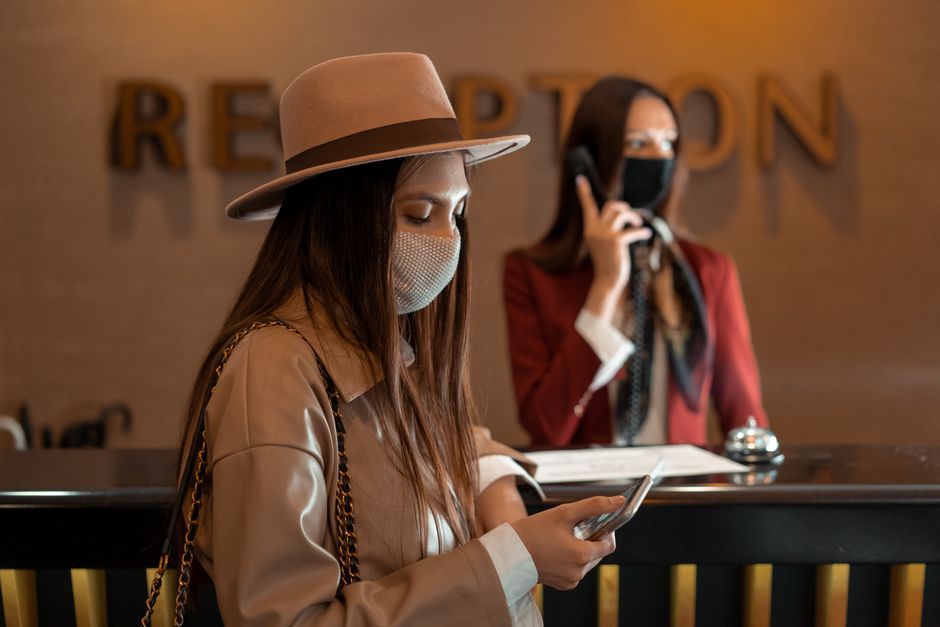
Walk in with your confirmation already open, greet the staff member, and state your name and reservation dates in one sentence; then answer only the questions needed to verify the booking, keep your identification and payment card in the same hand or pocket, and mention a late departure or luggage request before the registration is complete so the staff member can handle every time-sensitive detail in one pass.
At the desk
Read the key facts back before leaving: room number, breakfast time, Wi-Fi name, checkout time, and the route to the room; if the property uses a physical key, ask what to do if it is lost, and if it uses a code, save that code in your secure notes rather than taking a blurry photo, because a clear 60-second recap prevents the five-minute return trip that follows a rushed check-in.
This sequence works because it keeps verification, payment, instructions, and requests in a single conversation. It also gives staff a clean stopping point instead of leaving loose questions hanging across several interactions.
Mistakes that erase the time you saved
Do not optimize the wrong part
- Do not arrive without checking the latest check-in time. A fast digital confirmation cannot help if the desk closed at 8 p.m.
- Do not assume early check-in is available because the room appears empty online. Housekeeping may still be finishing, and the property may need time to inspect the room.
- Do not send a passport scan through an unverified chat link. Use the hotel’s official booking channel and share only what local rules require.
- Do not buy an expensive travel gadget for a one-night stay. An Anker 323 Power Bank with a 10,000mAh capacity and 22.5W output can be useful for frequent travelers, but a charged phone and a small wall charger solve the same arrival problem for many guests.
Know when an app is not the answer
Skip TripIt Pro if you take one simple trip a year and already keep confirmations in your email. Skip an Airalo eSIM if your carrier includes reliable destination data. Skip a printed itinerary if it adds clutter and you already have tested offline files. The best tool is the one you can open quickly when tired, carrying luggage, and standing outside an unfamiliar building.
Small hotels are gradually making arrival more flexible with lockboxes, digital forms, and messaging-based support, but the human handoff still matters. Travelers who prepare the right facts will benefit most as those systems improve, because every new check-in option works better when the property knows exactly when and how the guest will arrive.