Quirky Travel Accessories That Actually Solve Real Problems

The Gap Every Packing List Ignores
Standard packing lists converge on the same twenty items. Adapter. Neck pillow. Compression socks. Portable charger. They cover the obvious category and stop there — leaving an entire tier of problems unaddressed because the solutions look a little strange.
That tier is where the genuinely interesting travel accessories live. Not novelty gifts. Not “as seen on TV” junk. Products that solve specific, recurring friction points — sleeping upright without wrecking your neck, doing laundry without finding a laundromat, keeping a passport invisible in a high-theft environment — using approaches that conventional gear simply doesn’t.
The catch: for every one product in this category that actually works, there are four that sound clever in a product description and collect dust after the second trip. The design-school aesthetic fools people. Something shaped unusually gets mistaken for something that functions unusually. Those aren’t the same thing.
What separates the useful from the gimmicky almost always comes down to a single question: does this solve a problem you’ve actually had, or does it create a solution in search of one? Keep that question in front of you as you read, because the market for quirky travel accessories is full of products designed to look like the answer before anyone’s confirmed what the question is.
This breakdown covers what works, what doesn’t, and — critically — when you should skip the gadget entirely and spend nothing at all.
The Quick Test: Useful Quirky vs. Expensive Clutter
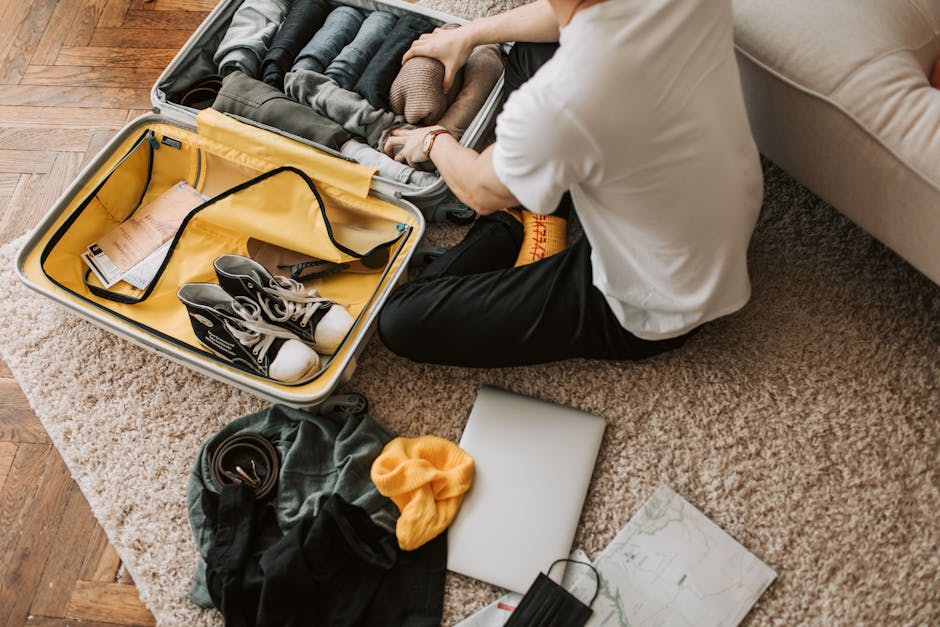
Before buying anything that looks unconventional, run it through this table. The categories are blunt on purpose.
| Criteria | Worth Buying | Skip It |
|---|---|---|
| Problem frequency | Happens on every trip or every flight | “Might come up” or “once I was in a hostel and…” |
| Weight and pack size | Under 150g, fits in a palm | Needs its own packing space or its own bag |
| What it replaces | Multiple items, a clunky workaround, or nothing available | Something you already own that works fine |
| Security risk | Clears TSA without conversation | Gets flagged, questioned, or requires explanation |
| Battery required? | No — purely mechanical or passive | Yes — another thing to charge, another failure point |
| Price | Under $50, or justifiable across multiple trips per year | $80+ for a function you’ll use twice |
The Scrubba Wash Bag ($29) passes every column cleanly. The Ostrich Pillow — the full wearable nap hood at $99 — passes most but fails on one metric that the table doesn’t capture well: the social cost of wearing a beige fabric hood over your head in Gate 34B. That’s a real tradeoff. The table doesn’t make decisions for you; it stops you from buying on impulse before you’ve thought it through.
Products with batteries deserve a specific note. Lithium battery regulations on airlines caught the smart luggage market off guard — Bluesmart’s entire line shut down in 2018 after carriers began enforcing removable-battery rules. Any accessory that requires charging adds weight, failure risk, and a potential TSA conversation. The most durable travel accessories in this category are mechanical or passive. Keep that in mind as the list below skews heavily toward products with no USB port.
Five Accessories That Look Strange and Work Every Time
Scrubba Wash Bag — $29, Laundry Without a Laundromat
The Scrubba is a waterproof nylon bag with a grid of flexible internal nodules. You add a garment, a few drops of travel detergent, enough water to submerge the item, seal the roll-top closure, and knead it for 30 seconds to three minutes. The nodules create mechanical agitation — not machine-level, but enough for socks, underwear, and lightweight shirts. Rinse, wring, hang. Done.
The material is 70D nylon — the same construction used in quality dry bags. It doesn’t fail after a few uses. It’s been around since 2013 and still ships the same basic design because the design works. The honest limitation: anything thicker than a light shirt comes out unevenly clean, and jeans aren’t worth attempting. It’s a tool for synthetic fabrics and merino wool, not heavy cotton.
Where this changes trips entirely: Southeast Asia itineraries of two or more weeks, rural travel with no laundry access, and carry-on-only travel where packing seven days instead of fourteen of clothes becomes viable. Frequent travelers who use the Scrubba consistently report cutting their clothing pack by 30–40%.
AirHooks — $12–$15 for a Two-Pack
AirHooks are small silicone hooks that clip onto an airplane tray table latch. You hang a bag, a jacket, a water bottle, or headphones from them. The tray table stays usable. The floor stays clear.
This is a $13 product that solves a problem every person on every flight has. The simplicity is the point. Sometimes the best quirky accessory isn’t trying to be clever — it’s just filling a gap that nobody bothered to fill before.
Matador Pocket Blanket — $25, 74 Grams
The Matador Pocket Blanket compresses into a case the size of a lip balm tube and opens to 63″ x 44″ — enough for two people sitting or one person lying down. Ripstop nylon, water-resistant on one side, corner loops for staking in wind. It packs smaller than a paperback book and weighs less than a pair of socks.
Beach trips, long layovers in airports with limited seating, outdoor markets, parks, picnics, transit hubs with dirty floors. It replaces a beach towel in most non-swimming contexts. At 74 grams, there is no reasonable argument against putting one in your bag permanently.
Trtl Pillow — $59.99
The Trtl looks like a scarf with a plastic spine inside, which is exactly what it is. The internal rigid panel supports your jaw and cheek, preventing your head from dropping forward or sideways when you fall asleep upright. It wraps around the neck and cinches with a hook-and-loop fastener. Packs flat to roughly the size of a folded hand towel.
A rigid support attached to your body doesn’t shift the way a loose U-pillow does. That’s the mechanical logic, and it’s sound. The caveat: it doesn’t work if you sleep with your head tilted backward against the headrest. It’s designed specifically for forward and side-lean sleepers. Window seat passengers with a wall to lean toward get the most out of it; middle-seat sleepers get less.
Pacsafe Coversafe X75 — $35, Wearable and Invisible
The Pacsafe Coversafe X75 is an RFID-blocking neck pouch made with slash-resistant fabric and a stainless steel wire-reinforced strap. It sits flat against your chest under a shirt, holds a passport, three cards, and folded cash, and is completely invisible when worn. The slash-resistant construction means it can’t be cut off. The RFID blocking protects contactless cards from scanning.
For travel in high-pickpocket environments — Barcelona, Rome, Lisbon, Bangkok, any major transit hub — this is the specific product that earns its $35 cost every single trip. A visible belt pack is a target. A bulge under a shirt isn’t. The invisibility is the feature.
The Two-Rule Filter (Read Before You Buy Anything)
Never buy a travel accessory for a hypothetical trip. Buy it only if you’ve had the problem it solves on at least two previous trips. If you’re buying it “in case,” you’re buying clutter.
Never buy travel gear with a battery unless the battery is genuinely the point. The BauBax Travel Jacket ($200+, with 15 built-in pockets, a built-in neck pillow, and an eye mask pocket) is clever engineering that solves a packing problem by adding weight to your body instead of your bag. Most people who buy it use it twice. Passive, mechanical, no-charge-required accessories have a 10-year lifespan. Gadgets have a firmware update cycle.
Sleep and Comfort: Where the Unusual Solutions Actually Win
Why Standard Sleep Gear Underperforms
The problem with sleeping on a plane isn’t tiredness — it’s three overlapping issues: cabin noise in the 85–95 dB range during cruise, ambient light from screens and overhead panels, and the physics of staying upright with a relaxed neck. Standard foam earplugs reduce noise by 15–25 dB but don’t block the low-frequency engine hum effectively. Standard flat eye masks press against eyelids and shift within an hour. U-shaped neck pillows lose their support as soon as neck muscles relax.
Each of these failures has a specific product that addresses it better. None of them are the mainstream option.
Loop Quiet Earplugs — $24.95, SNR 27dB
Loop Quiet earplugs use a hollow acoustic channel — the circular loop shape — to filter sound rather than just blocking it. SNR rating of 27dB, available in XS, S, M, and L tip sizes. They stay in through physical fit rather than foam expansion, which means no ear canal pressure after two hours. Reusable, washable, case included.
For light sleepers who find foam earplugs either fall out or cause discomfort, these are a genuine upgrade. They’re not the highest attenuation option — dedicated shooting earplugs hit 33dB+ — but they’re the best balance of noise reduction, comfort, and wearability for extended use on a flight.
Manta Sleep Mask — $35, No Pressure on Eyes
The Manta uses adjustable molded eye cups instead of flat fabric. Each cup positions independently, accommodating different face geometries. Your eyes have complete darkness with nothing touching them — no fabric pressure, no lash interference, no waking up with a crease across your face.
The flat-fabric mask category is dominated by products that work in product photos and shift during actual sleep. The Manta stays in position because the cups are mounted to a wide elastic band that anchors across the back of the head. This is the best eye mask most frequent flyers haven’t tried. The word-of-mouth on it among long-haul travelers is unusually strong for a $35 accessory.
Organization and Security: Three Questions Worth Answering Directly
Do Compression Packing Cubes Actually Work?
Eagle Creek Pack-It Compression Cubes ($19.95–$39.95 per cube) compress clothing by approximately 30–40% by pushing air through a one-way valve. That compression reduces volume, not weight. Useful for carry-on travelers who hit volume limits before weight limits. Not useful if you’re checking a bag with space to spare, and actively counterproductive if compression makes you pack more clothes — you’ve just made your bag heavier without solving anything.
Use compression cubes to fit the same amount of clothing into less space. Not to justify bringing more clothing. That distinction is where most buyers go wrong.
Do Slim Travel Wallets Actually Prevent Pickpocketing?
Partly. The Ekster Parliament ($89) and the Dango M1 Maverick ($79) both slim to under 8mm holding 5–6 cards. Both are RFID-blocking. A slim wallet sits flatter in a front pocket, is harder to detect through fabric, and doesn’t have the bulge profile that marks a rear-pocket bifold as a target. That’s a real security improvement. It’s not foolproof — a skilled pickpocket can still get a front-pocket wallet — but it reduces risk measurably compared to a standard bifold in a back pocket.
For higher-risk destinations, pair a slim wallet with the Pacsafe Coversafe for passport and backup cards. Keep spending cards in the wallet, everything critical against your chest.
Are TSA Luggage Locks Worth Buying?
Most standard TSA combination locks ($8–$25) can be opened in under a minute by someone who knows what they’re doing. This is publicly documented and not a secret. They deter opportunistic theft — someone who just wants to grab and go — but they’re not security against anyone motivated. Use them for that limited purpose, or skip them entirely and secure valuables in a hotel safe or the Pacsafe Coversafe.
When to Skip the Accessory Entirely
The Ostrich Pillow ($99) works exactly as described. It blocks light completely, creates a warm microclimate around your face, and reduces external sensory input enough to help some people sleep in loud environments. It also requires you to appear, in public, to be wearing a fabric sack over your head. That’s not a hypothetical concern — it’s a consistent theme in user reviews from people who bought it and stopped using it. If you sleep in airport lounges frequently and genuinely don’t care, it’s a legitimate product. For most people, the embarrassment cost is real and the Trtl does 80% of the job for less money with no social friction.
Collapsible travel utensil sets ($12–$25) are a recurring packing blog recommendation that doesn’t survive contact with reality. Every restaurant has cutlery. Every café has something. The only scenario where personal utensils genuinely matter is camping or backcountry hiking, in which case you’d buy camping utensils, not travel accessories. This is the clearest example of a solution that exists without a problem.
Smart luggage with GPS and USB ports from brands like Away ($595) and Arlo Skye ($695+) solves the airline battery problem (removable lithium cells) but introduces a pricing problem — those prices only make sense if the GPS tracking or integrated scale actively changes how you travel. For most people, checking the airline app for bag location and using a $15 luggage scale does the same job at a fraction of the cost.
The pattern across everything that ends up as expensive clutter: it solves a problem that happens once per ten trips, or it solves a problem that was already solved by something simpler. A useful quirky accessory solves a problem on every trip, sometimes every day of every trip. That frequency test is the most reliable filter in the whole category — and it’s the one most travelers skip because a clever product description makes the problem feel more common than it actually is.