Patagonia Multi-Day Hike: Gear and Routes That Actually Work
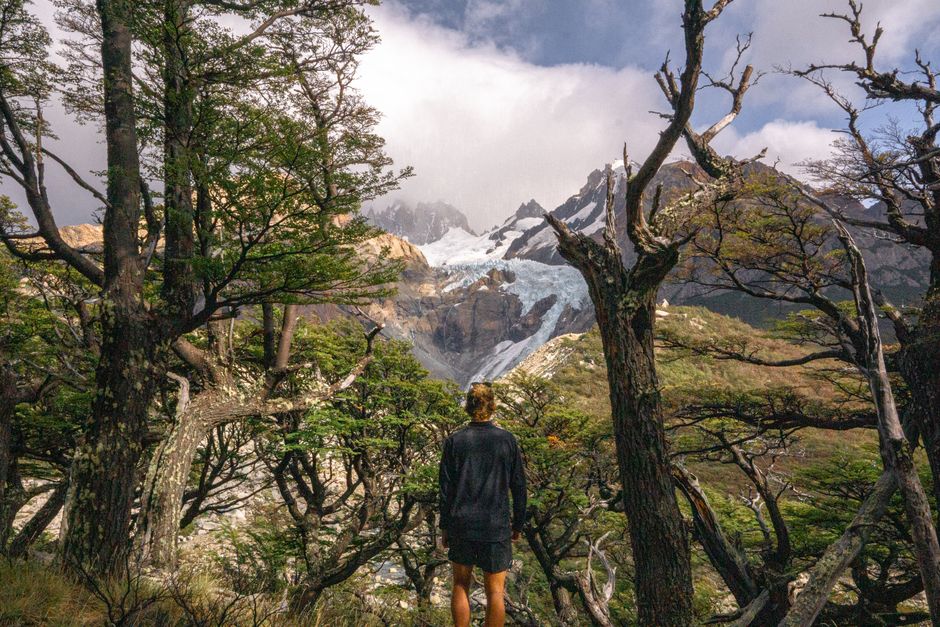
On a single day in January 2026, rangers at Torres del Paine recorded four distinct weather conditions — clear skies, horizontal rain, snow, and 90 km/h wind gusts — at the same campsite, within 12 hours. That is not an anomaly. That is Tuesday in Patagonia.
I have done the W Trek twice and the Huemul Circuit once. Here is what I learned the expensive way, and what I would tell anyone planning their first multi-day hike in Patagonia right now.
Why Patagonia Is Different From Every Other Mountain Hike You Have Done
Most mountain hiking teaches you to read the weather, dress in layers, and keep moving. Patagonia invalidates half of that experience. The wind does not just affect comfort — it determines whether you can stand up, pitch a tent, or hold your trekking poles. I have watched hikers with €600 Gore-Tex jackets retreat because their hood had no single-hand adjustment and they could not see into the gale.
The W Trek, the most popular route, is not technically hard. Total elevation gain across five days sits around 1,200 meters cumulatively. Manageable. But sustained wind at 80 km/h on an exposed ridge while you are soaked through turns a moderate hike into a survival situation fast.
What makes Patagonia genuinely hard is the combination: unpredictable weather, limited bailout options, expensive logistics if you forget something, and campsite reservations that lock you into specific nights regardless of conditions. You cannot just wait out a storm an extra day at Refugio Grey — you have a reservation at Campamento Torres and that is where the itinerary says you are going.
Most first-timers underestimate the logistics and overestimate the trail difficulty. It is always the logistics that break trips here.
Route Comparison: W Trek, O Circuit, and Huemul Circuit Side by Side
Three routes dominate the conversation for multi-day Patagonia hiking. They suit very different hikers, and picking the wrong one is a common and expensive mistake.
| Route | Distance | Days | Difficulty | Permits | Best For |
|---|---|---|---|---|---|
| W Trek (Torres del Paine) | ~80 km | 4–5 days | Moderate | CONAF — book 6+ months ahead | First-time multi-day hikers |
| O Circuit (Torres del Paine) | ~130 km | 8–9 days | Moderate–Hard | CONAF — harder allocation | Experienced hikers wanting solitude |
| Huemul Circuit (El Chaltén) | ~64 km | 4 days | Hard | Free permit, park office, no advance booking | Hikers wanting a real challenge, fewer crowds |
| Fitz Roy Trails (El Chaltén) | Varies | 2–4 days | Moderate | None required for most trails | Spontaneous planners, shorter trips |
My recommendation for a genuine first timer: the W Trek. Not because it is the easiest — but because the infrastructure (refugios, clearly marked trails, rescue access) gives your first Patagonian experience a reasonable safety net. Save the Huemul Circuit for your second trip once you know how your gear and body perform in Southern Patagonian conditions.
One section I would specifically skip for a first multi-day hike: the John Gardner Pass crossing on the O Circuit back section. The descent into Campamento Paso is steep, slippery, and genuinely dangerous in bad weather. Many hikers who booked it optimistically turn back right there.
The Gear That Actually Handles Patagonian Conditions
Rain Jacket — This Is Not the Place to Go Budget
I hike in the Arc’teryx Beta AR ($599) — fully seam-taped Gore-Tex Pro construction, a helmet-compatible hood with single-hand adjustment, and pit zips for venting. In horizontal rain at 70 km/h, that hood adjustment is the difference between a wet face and a functional face. The Marmot Minimalist ($200) is a solid Gore-Tex alternative, but the hood is less adjustable and I have ended up soaked after sustained heavy rain wearing it.
Whatever you choose: it must be Gore-Tex or equivalent 3-layer construction. 2.5-layer water-resistant jackets are not adequate for multi-day Patagonia hiking. Full stop.
Boots — Waterproof, Mid-Cut, Already Broken In
The Salomon X Ultra 4 Mid GTX ($180) is what I recommend to most first-timers. Gore-Tex lining, good ankle support, and a sole that handles Patagonia’s specific mix of mud, exposed root, and wet rock. For the Huemul Circuit’s more technical terrain, the Scarpa Zodiac Plus GTX ($300+) is worth the upgrade — stiffer construction handles uneven ground better. Overkill for the W Trek, right tool for the Huemul.
Break them in over at least 150 km before you go. Blisters on day two of a five-day hike with no bailout option are not a minor inconvenience.
Pack — Fit Matters More Than Brand
For the W Trek staying in refugios, a 40L pack is enough. Camping the full route, you need 55–65L. The Osprey Atmos AG 65 ($270) is the easiest recommendation — the Anti-Gravity suspension handles long days well, and the fit-on-frame system lets you dial in torso length properly at purchase. I have also used the Gregory Baltoro 65 ($300), which is comparable in comfort but runs slightly heavier.
Layering When Temperature Swings 15°C in Under an Hour
The standard three-layer system works. But material choices matter more in Patagonia than anywhere else I have hiked.
Base layer: merino wool, not synthetic. When you sweat hard and stop suddenly in 15°C wind, synthetic base layers go cold and clammy fast. The Smartwool Classic All-Season Merino base layer ($100) regulates better and does not develop the smell issues of synthetic after three days without access to laundry.
Mid layer: packable synthetic insulation for breaks and camp. The Patagonia Nano Puff ($229) — synthetic fill, packs small, keeps working when slightly damp. Avoid down mid-layers here. Down compresses poorly once wet, and it will get wet.
Add a lightweight windshirt for dry windy days when the full shell is overkill. The Arc’teryx Squamish Hoody ($149) weighs 130g and stops the wind without overheating you on the sunnier stretches.
Gloves and a buff are not optional. Even in January — Southern Hemisphere summer — wind chill on exposed ridgeline sections drops temperatures below what bare hands tolerate for more than a few minutes.
Campsite Reservations: Book in August for January
This is where most first-time W Trek hikers get blindsided, and it is worth explaining in full.
CONAF, the Chilean national parks authority, requires advance campsite reservations for Torres del Paine. Peak season runs November through March. If you are planning a January 2026 hike, campsites at high-demand spots — Campamento Torres, Refugio Grey, Campamento Italiano — regularly sell out by August. I am not being dramatic for effect. By September they are gone.
Booking runs through the official CONAF portal and through authorized operators: Fantástico Sur and VERTICE Patagonia manage different park sectors. Depending on your route direction and which camps you target, you may need to book through both operators separately on two different websites. This confuses a lot of first-time planners who assume it is one unified system.
The Huemul Circuit near El Chaltén works completely differently — free permit from the El Chaltén park office, no advance booking, first come first served. This is one of its genuine practical advantages over the W Trek for anyone who cannot plan six months out.
For the W Trek in peak season: set a calendar reminder for early August if you want January dates.
Pack Weight
Target under 12 kg total with water and food for a refugio-assisted W Trek. Over 15 kg in Patagonian wind shifts your center of gravity on exposed ridges and destroys your shoulders by day three. Cut tent weight first: the MSR Hubba Hubba NX ($500, 1.72 kg) is the standard two-person Patagonia tent recommendation for a reason — freestanding, bomber in wind, reasonable weight.
Three Mistakes That Actually End Patagonia Hikes Early
Storing Rain Gear at the Bottom of Your Pack
The W Trek has hikers setting out from Refugio Chileno to the Torres lookout at 5 AM for sunrise. By 7 AM, those same hikers are sometimes descending in full horizontal rain. The mountain does not care about your alarm time. Carry your rain jacket and pants accessible — in the top lid or a side pocket — every single day, regardless of what the morning sky looks like.
Building a Tight Flight Connection Around Your Exit Day
Patagonia weather forces rest days. Rangers close exposed trail sections. Bridges flood in heavy rain years. If your return flight out of Punta Arenas departs 24 hours after your planned park exit, you have zero buffer. Build two extra days into your trip end. The most visibly stressed hikers I encountered on both W Trek trips were those with same-day or next-morning connections.
Skipping the Satellite Communicator
Cell service in Torres del Paine is nonexistent beyond the park entrance. The Garmin inReach Mini 2 ($350 plus subscription) is what I carry. Rent one through an outdoor retailer in Punta Arenas if you will not use it again — rental runs about $15–20 per day. It is not dramatic preparation. It is the device that tells someone your GPS coordinates if you roll an ankle on the John Gardner Pass descent with no one behind you on trail.
Fit enough to walk 15 km days with a loaded pack, comfortable camping in cold and wet conditions, planning a January 2026 trip: do the W Trek. Book CONAF campsites by September 2026. Bring the Arc’teryx Beta AR, lace up the Salomon X Ultra 4 GTX after breaking them in properly, and carry the Garmin inReach Mini 2. That combination works.