Exploring Barrio de Santa Cruz: The historic heart of Sevilla
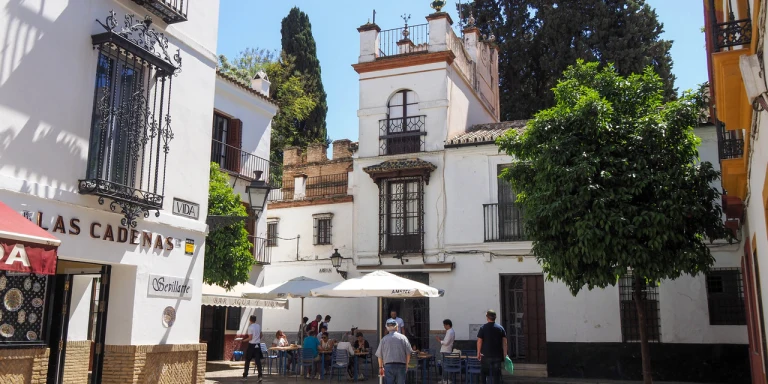
Most guidebooks tell you the Barrio de Santa Cruz is a “must-see” maze of charming alleys and orange trees. They don’t tell you that from 11am to 6pm, those alleys are a human traffic jam. I walked through it on a Tuesday in April and spent more time dodging selfie sticks than looking at architecture.
The Barrio de Santa Cruz is the old Jewish Quarter of Sevilla. It’s genuinely beautiful — whitewashed walls, wrought-iron balconies, hidden courtyards. But if you go in blind, you’ll spend your time in a slow-moving line of tourists, eating overpriced tapas on Calle Mateos Gago. This article is about how to actually explore it on its own terms. No fluff. Just what works.
Why the Barrio de Santa Cruz feels overcrowded (and how to fix it)
The core problem is simple geometry. The streets are 2–3 meters wide in many places. The Plaza de Doña Elvira, a popular meeting point, fits maybe 80 people comfortably. On a peak Saturday, 400 people try to stand there. It doesn’t work.
Peak crowding times are 11:00–14:00 and 17:00–19:00. Cruise ship passengers arrive from the port around 9:30am and flood the area by 10:30am. Tour groups from the Cathedral hit the quarter around midday.
Best hours to walk the Barrio de Santa Cruz
Go at 8:00am. The bakeries on Calle San Esteban are open. The streets are empty. You can actually see the tilework on the walls without someone’s elbow in your face. By 9:30am, the first tour groups start trickling in. You have a solid 90 minutes of quiet.
Alternatively, go after 8:30pm. The area is well-lit. Most day-trippers have left. The locals come out for evening paseo. The temperature drops. It’s a completely different place.
Routes that avoid the main crush
The main pedestrian artery is Calle Mateos Gago, leading from the Cathedral to the quarter. Avoid it entirely if you can. Instead, enter from Calle Ximénez de Enciso (near the Alcázar wall) or from Calle Lope de Rueda near the Jardines de Murillo. These side entrances put you straight into the quieter residential sections.
One specific route that works: Start at the Jardines de Murillo (free, open 8am–10pm). Walk north through the gardens, enter the quarter at Calle del Agua. Follow it past the Plaza de la Alianza (small, usually quiet) and cut through to Plaza de los Venerables. From there, you can reach the main plazas without ever touching Mateos Gago.
The 3 hidden plazas worth walking out of your way for
Everyone knows Plaza de Santa Cruz (the one with the iron cross and the orange trees). It’s small, crowded, and the tapas bars there are 30% more expensive than two streets over. Skip it.
These three plazas are better. Quieter. More authentic. And they don’t charge €15 for a plate of jamón.
Plaza de los Venerables
This is a large, open square in front of the Hospital de los Venerables (a 17th-century baroque building, now an art center). The plaza has a central fountain, shade from orange trees, and benches. On weekday mornings, it’s nearly empty. On weekend evenings, local families sit here. The bar on the corner, La Terraza de los Venerables, charges €3.50 for a caña (small beer) — compare that to €5 on Mateos Gago.
Plaza de la Alianza
Tiny. One bench. A single orange tree. A fountain that barely works. That’s the point. It’s hidden behind a narrow archway on Calle de la Alianza. You’ll miss it if you’re not looking. There’s no bar, no souvenir shop, no tour group stop. It’s just a quiet spot to sit for 10 minutes. Coordinates: 37.3858° N, 5.9905° W.
Plaza de Santa Marta
Located near the Church of Santa María la Blanca (which was a synagogue before 1391). This plaza is residential. You’ll see laundry hanging from balconies, cats sleeping on windowsills, and maybe one or two other tourists. The church itself is worth a quick look — free entry, 13th-century Mudéjar architecture, a baroque altarpiece. The plaza has a single tapas bar, Taberna Santa Marta, where a montadito (small sandwich) costs €2.50.
How to visit the Barrio de Santa Cruz without spending €50 on overpriced tapas
The food in the tourist core is marked up 40–60% compared to the rest of Sevilla. A plate of patatas bravas on Calle Mateos Gago runs €9–12. Two blocks away on Calle San Esteban, it’s €5.50. The difference is rent.
Here’s how to eat well without getting fleeced.
Where locals eat within the quarter
Taberna Coloniales (Plaza de la Concordia, just outside the quarter’s north edge). Two blocks from the Cathedral. They serve a salmorejo (cold tomato soup) for €4.50 and a plate of presa ibérica (pork shoulder) for €12. The place is full of locals at lunch. No English menu. That’s how you know it’s real.
Bar El Comercio (Calle Lineros, 20). A 120-year-old bar. They do fried fish and montaditos. A plate of boquerones (anchovies) costs €6. A glass of manzanilla sherry is €2.20. Cash only. Open 8am–4pm, closed Sundays.
La Sacristía (Calle Mateos Gago, 18). Yes, it’s on the tourist street. But it’s a hole-in-the-wall that sells empanadas and beer for €4 total. No seating. You eat standing on the curb. The empanadas are made fresh in the morning. By 1pm they’re often sold out.
The tapas crawl strategy
Don’t sit down for a full meal in the quarter. It’s too expensive and the quality is average. Instead, do a walking crawl: one tapa and one drink at 3–4 different bars. You’ll spend €15–20 total, taste more variety, and see more of the area. Start at Bar El Comercio (€2.20 for a beer + €6 for boquerones), walk to Taberna Santa Marta (€2.50 montadito + €2.50 wine), then finish at La Terraza de los Venerables (€3.50 beer + €5 tortilla). Total: €21.70. You’re full. You didn’t sit in a tourist trap.
Common mistakes that ruin a visit to the Barrio de Santa Cruz
I made most of these myself on my first trip. Here’s what to avoid.
Mistake 1: Trying to see the Alcázar and the quarter in the same morning
The Alcázar of Seville requires 2–3 hours minimum. The queue for tickets without a reservation can be 90 minutes. If you book the Alcázar for 10am, you won’t be free until 1pm. By then, the quarter is packed, you’re hungry, and you’ll eat at the first overpriced place you see.
Fix: Visit the Alcázar on a separate day. Or book the first entry slot (8:30am) and be out by 11am. Then walk the quarter from 11am–1pm before the lunch rush. Buy Alcázar tickets online at least 3 days in advance. On-site ticket office often sells out by 10am.
Mistake 2: Assuming all orange trees produce edible fruit
They don’t. The bitter orange trees (Citrus aurantium) planted throughout the quarter are ornamental. The fruit is sour and inedible. I saw a tourist pick one, bite into it, and spit it out on the cobblestones. Don’t be that person. The edible oranges are the sweet varieties (Citrus sinensis), which are rare in public spaces. If you want good oranges, buy them from the Mercado de Triana across the river.
Mistake 3: Wearing shoes that can’t handle cobblestones
The streets are irregular stone, some over 500 years old. Heels, thin sandals, or new leather soles will hurt within an hour. I walked 8km one day just within the quarter. Wear rubber-soled walking shoes with arch support. I used Merrell Moab 3s and had no foot pain. My partner wore Toms and was limping by 3pm.
Mistake 4: Trusting the “Free Walking Tour”
Most are tip-based and run by guides who work on commission from specific restaurants and shops. They’ll take you to places that pay them a kickback. I went on one that spent 20 minutes in a souvenir shop that sold “authentic” flamenco fans for €25. The same fan cost €8 at a shop on Calle San Luis. If you want a guided tour, book one through a reputable company like Pancho Tours (€15, 2 hours, no shopping stops).
When to skip the Barrio de Santa Cruz entirely (and what to do instead)
This might sound strange in a guide about the quarter, but there are times when you should not go. Here’s the honest call.
Skip it during Semana Santa (Holy Week)
The quarter is the epicenter of Sevilla’s Easter processions. Streets are closed. You’ll be packed into barriers with 50,000 other people. You won’t see any architecture, you’ll just see the backs of heads. If you’re in Sevilla for Semana Santa, watch the processions from the Plaza de la Encarnación (near the Metropol Parasol) where there’s more space. Visit the quarter on a weekday the week before or after.
Skip it on Sunday afternoons (April–October)
Sunday is when locals and Spanish tourists from nearby towns flood in. The quarter is a pedestrian zone, but it becomes a solid wall of people from 12pm–8pm. Instead, go to the Parque de María Luisa (10-minute walk south). It’s 85 acres of gardens, fountains, and shade. Plaza de España is right there. You’ll have room to breathe. The park is free and open until midnight.
Skip it if you have mobility issues
The quarter has no flat streets. It’s all inclines, stairs, and uneven cobblestones. Wheelchairs and strollers are very difficult. There are no ramps into most bars or shops. The Alcázar is more accessible (wheelchair ramps at the main entrance), but the quarter itself is not. Alternative: Walk along the Guadalquivir River from the Torre del Oro to the Puente de Triana. Flat, paved, good views, and has accessible cafes.
What to do with the time you save
If you cut out a crowded afternoon in the quarter, you have 3–4 hours free. Use it to visit the Casa de Pilatos (€12 entry, 15th-century palace, mix of Mudéjar and Renaissance architecture, much quieter than the Alcázar). Or walk across the river to Triana market (Mercado de Triana, open 8am–3pm, Mon–Sat) for fresh seafood and ceramic shopping at half the quarter’s prices.
Quick reference: Barrio de Santa Cruz visit strategy
| Element | Recommendation | Why |
|---|---|---|
| Best time to go | 8:00–9:30am or after 8:30pm | Fewer than 50 people in main plazas vs. 500+ at midday |
| Entry point | Jardines de Murillo → Calle del Agua | Avoids Calle Mateos Gago crowds entirely |
| Best plaza for quiet | Plaza de la Alianza | Hidden, one bench, no bars or shops |
| Best cheap tapas | Bar El Comercio (€6 boquerones + €2.20 beer) | 120-year-old bar, locals only, cash only |
| Worst mistake | Visiting after 11am without a plan | You’ll queue for everything and pay 50% more |
| When to skip entirely | Semana Santa, Sunday afternoons, if mobility-limited | Alternatives: Parque María Luisa, Casa de Pilatos, Triana |
The Barrio de Santa Cruz is one of the most beautiful neighborhoods in Europe. But beauty doesn’t scale. It breaks under the weight of 20,000 daily visitors. Go early. Go late. Skip the main drag. Eat where the tiles are worn from foot traffic, not from tour bus groups. You’ll see the same orange trees and iron balconies — just without someone’s backpack in your face.