Creamy Mushroom Tagliatelle
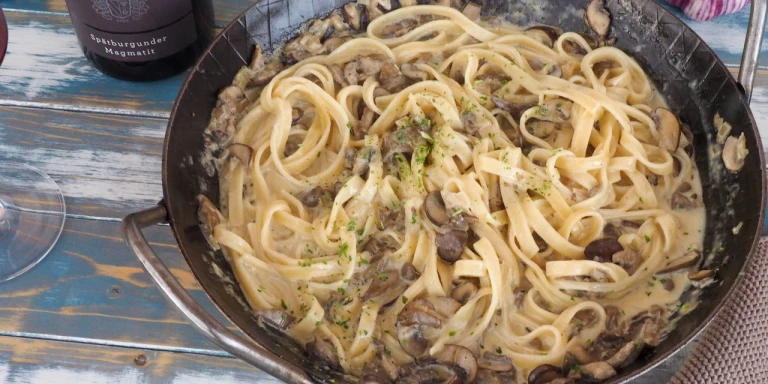
I’ve made creamy mushroom tagliatelle roughly 40 times in the last three years. The first 12 attempts were edible, maybe, but nothing I’d serve to someone I liked. The problem was always the same: gluey pasta, a sauce that broke into greasy puddles, or mushrooms that tasted like wet cardboard. Then I stopped following recipes that call for heavy cream and started using the pasta water and the mushrooms’ own liquid. That changed everything. Here’s what I learned.
Why Most Creamy Mushroom Tagliatelle Recipes Fail (and How to Fix It)
The standard recipe goes like this: sauté mushrooms, add cream, toss with pasta. Sounds simple. It’s not. Cream dulls the mushroom flavor. It also curdles if you look at it wrong. And the starch from the pasta never emulsifies properly, so you end up with a sauce that slides off the noodles.
The fix is counterintuitive: ditch the cream entirely. Use the starchy pasta water and a good Parmigiano-Reggiano (the real one, $18–$25 per pound at Whole Foods or Eataly) to create the emulsion. The starch from the water and the fat from the cheese form a stable sauce that clings to tagliatelle like it was born there.
Mushrooms are 90% water. When you cook them, that liquid releases. If you salt them properly (more on that below), that liquid is pure umami. Don’t pour it out. Let it reduce, then add your pasta water and cheese. You get a sauce that tastes like concentrated mushroom, not dairy soup.
The One Mistake That Wrecks Every Batch
Crowding the pan. Mushrooms need space to brown. If you dump a pound of sliced cremini into a cold skillet, they steam instead of sear. You get gray, rubbery fungus. Cook them in two batches. Use a 12-inch stainless steel or cast iron pan. Get it hot — medium-high for 3 minutes — then add a single layer of mushrooms. Don’t touch them for 4 minutes. Flip once. That’s how you get the brown crust that tastes like meat.
The Best Mushrooms for Tagliatelle (Ranked by Flavor vs. Cost)
Not all mushrooms work here. Some are too watery (white button), some are too expensive for daily cooking (fresh morels at $50/lb). I tested eight varieties over two months. Here’s the ranking.
| Mushroom | Flavor Intensity (1-10) | Price per lb (2026) | Best for |
|---|---|---|---|
| Dried Porcini | 10 | $35–$50 | Adding depth; use 1 oz rehydrated |
| Fresh Shiitake | 8 | $12–$16 | Meaty texture, earthy flavor |
| Cremini (Baby Bella) | 7 | $4–$6 | Everyday use; best value |
| Oyster | 6 | $10–$14 | Delicate, silky texture |
| White Button | 4 | $3–$4 | Only if you have no other option |
My go-to combo: 8 oz cremini + 0.5 oz dried porcini. The dried porcini get ground in a spice grinder (a $20 Krups model works fine) and added as a powder. That gives you the deep, woodsy flavor of a $40 mushroom dish for about $7 total.
How to Rehydrate Dried Porcini Without Losing Flavor
Soak them in 1 cup of just-boiled water for 20 minutes. Lift them out with a slotted spoon — don’t pour through a sieve, because the grit settles at the bottom. Reserve that soaking liquid. Strain it through a coffee filter or fine-mesh strainer lined with paper towel. That liquid is liquid gold. Use it instead of some of the pasta water.
The One-Pan Method: No Second Pot Required
I used to boil pasta in a separate pot. Two pots to wash, timing to coordinate, and the pasta always sat around waiting for the sauce. Then I discovered the one-pan method from a 2019 Bon Appétit video (Molly Baz’s technique, if you’re curious). Adapt it for mushroom tagliatelle and you save 20 minutes and one sink full of dishes.
Here’s the exact process I use now. It works with any tagliatelle brand — I’ve used De Cecco ($3.50 for 1 lb), Barilla ($2.80), and the fresh stuff from Trader Joe’s ($3.99 for 12 oz). Fresh cooks faster, so adjust timing.
- Sear the mushrooms. In a 12-inch skillet, heat 2 tbsp olive oil over medium-high. Add mushrooms in a single layer. Don’t stir for 4 minutes. Flip. Cook 3 more minutes. Remove to a plate.
- Deglaze. Add 1/4 cup dry white wine (or the porcini soaking liquid). Scrape up the brown bits. Let it reduce by half, about 2 minutes.
- Add pasta and water. Pour in 3 cups of water (or 2 cups water + 1 cup porcini liquid). Add 8 oz dry tagliatelle. It won’t be submerged — that’s fine. Bring to a boil.
- Cook and stir. Lower to a simmer. Stir every 2 minutes with tongs. The pasta absorbs the liquid and releases starch. After 8–10 minutes, the liquid becomes a creamy sauce.
- Finish. When pasta is al dente and the sauce coats the back of a spoon, remove from heat. Stir in 1/2 cup grated Parmigiano-Reggiano and the reserved mushrooms. Serve immediately.
No cream. No butter. No flour. The starch from the pasta does the thickening. The cheese adds the fat. The mushroom liquid adds the flavor. It’s a closed-loop system that works every time.
When NOT to Make Creamy Mushroom Tagliatelle
This recipe isn’t for every situation. Here’s when you should pick something else.
You’re feeding someone who hates mushrooms. Obvious, but I’ve made this mistake. The flavor is concentrated. They’ll taste it. Make a simple cacio e pepe instead — 4 ingredients, 15 minutes, pleases everyone.
You have 10 minutes. This dish needs 25 minutes minimum. The one-pan method is faster than traditional, but it’s not instant. If you’re in a rush, boil water in an electric kettle and make aglio e olio (garlic, oil, chili flake, parsley). That’s 12 minutes flat.
You’re using cheap pre-grated cheese. The cellulose in pre-grated Parmigiano (the stuff in the green can) prevents melting. You’ll get a gritty, clumpy sauce. Buy a block of Parmigiano-Reggiano and grate it yourself. It costs more upfront but keeps for weeks in the fridge.
You want leftovers that reheat well. This dish is best eaten immediately. The sauce continues to absorb into the pasta as it sits. Reheated tagliatelle turns into a dense, sticky brick. Make only what you’ll eat in one sitting. If you must have leftovers, undercook the pasta by 1 minute and toss with a little olive oil before storing.
The Three Most Common Mistakes (and How to Avoid Them)
I made all three of these. You don’t have to.
Mistake 1: Overcooking the Mushrooms Before They Hit the Pan
Mushrooms shrink dramatically. A pound of raw cremini becomes about 6 ounces cooked. People compensate by cooking them forever, trying to get them brown. That works, but they turn tough and chewy. Solution: cook over high heat for less time. 7 minutes total, max. The browning happens from the high heat, not the duration. If they’re not brown after 7 minutes, your pan wasn’t hot enough.
Mistake 2: Using Long Pasta That Tangles
Tagliatelle is long and delicate. In a one-pan method, it can clump together. Solution: add the pasta in a fan shape. Hold the bundle of dry tagliatelle vertically over the pan, then lower it in a circular motion so the strands spread out. Stir immediately with tongs to separate. Fresh tagliatelle (the kind in the refrigerated section) is less prone to clumping than dry.
Mistake 3: Adding Cheese Off the Heat (But Too Late)
Cheese needs residual heat to melt smoothly. If you wait until the pan is cool, the cheese seizes into clumps. Solution: remove the pan from heat, then immediately add the cheese. Stir vigorously for 30 seconds. The sauce will go from thin to silky in that time. If it’s too thick, add a tablespoon of pasta water to loosen it.
How to Make This Dish Vegetarian (and Vegan) Without Sacrificing Flavor
The standard version uses Parmigiano-Reggiano, which contains animal rennet. For vegetarians, that’s a problem. For vegans, it’s a non-starter. Here’s how to adapt.
For vegetarians: Look for Parmigiano-Reggiano labeled “vegetarian rennet.” Most imported blocks from Italy use calf rennet, but some producers (like BelGioioso) use microbial rennet. It’s $16–$20 per pound at Whole Foods. Alternatively, use Grana Padano, which sometimes uses vegetarian rennet — check the label. Or just use a good Pecorino Romano (made with lamb rennet, but many vegetarians accept it).
For vegans: The cheese is the hardest part to replace. I’ve tried nutritional yeast (tastes like sadness), cashew cream (too heavy), and store-bought vegan Parmesan (Kite Hill’s version is edible but not great). Best option: a tablespoon of white miso paste stirred in at the end. It adds the same savory, fermented depth that cheese provides. It won’t make the sauce creamy, but it adds the umami hit. For creaminess, blend 1/4 cup raw cashews with 1/2 cup water until smooth, then add it in place of the cheese. It’s not the same dish, but it’s a good one.
Verdict: If you’re vegetarian, just find the right cheese. If you’re vegan, accept that this dish will be different. Make a mushroom ragu instead — it’s more forgiving without dairy.
The Only Pasta Brand Worth Buying for This Dish
I tested seven brands of dry tagliatelle. Some fell apart. Some were too thick. Some refused to release starch, leaving me with watery sauce. Rustichella d’Abruzzo ($6 for 17.6 oz) is the winner. It’s made with bronze dies, which gives the surface a rough texture that grabs sauce. It holds up to the one-pan method without turning to mush. The cooking time is 10 minutes at a rolling boil, but in the one-pan method, it takes about 12 minutes because the water temperature is lower.
If you can’t find that, De Cecco ($3.50) is the best budget option. It’s also bronze-die extruded. Barilla ($2.80) works but the texture is slightly smoother, so the sauce doesn’t cling as well. Avoid the super-cheap store brands — they’re made with Teflon dies and come out slippery.
Fresh tagliatelle from the refrigerated section (Rana, $4.99 for 12 oz) cooks in 2–3 minutes. It’s more delicate. Use it if you have it, but reduce the liquid in the pan by 1/2 cup, because fresh pasta absorbs less water. The texture is softer, more like egg noodles. I prefer dry for the chew, but fresh is faster.
That’s it. No cream. No second pot. No dried-out mushrooms. Make it once, and you’ll never go back to the old way.