Early Spring City Parks: Better Breaks Between Exhibits
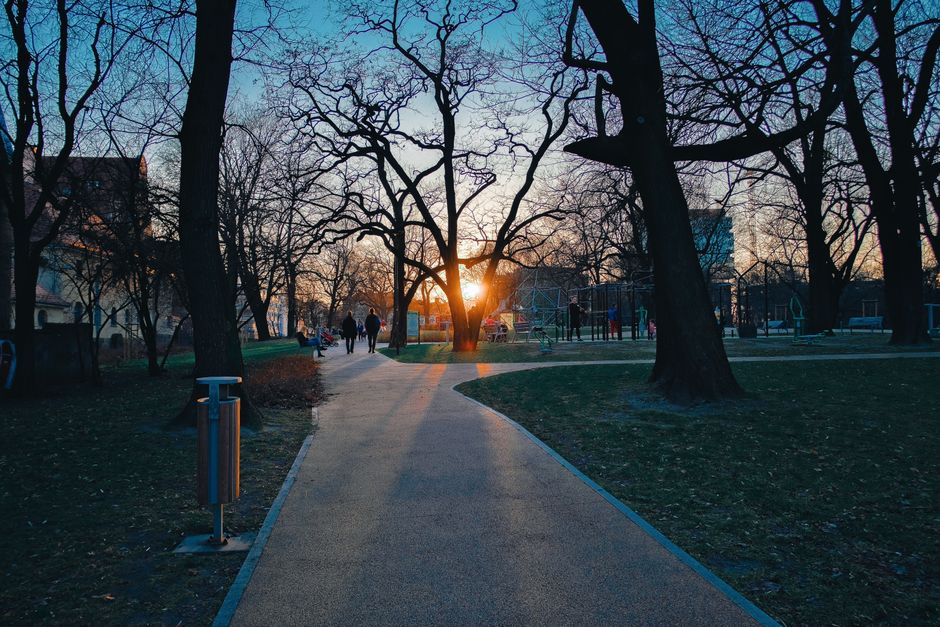
Early spring city parks give museum-heavy trips a useful reset: twenty or thirty minutes outdoors can clear your head before the next gallery, even when the air still feels cold. The strongest plan treats the park as part of the cultural route, not as an ambitious extra that must fill half a day.
Why early spring city parks improve a museum day
My clear recommendation is to schedule one short park break between indoor exhibits. Do not wait for perfect spring weather. In March and early April, the value comes from changing your surroundings before tiredness turns the next museum into a blur.
The first principle is contrast, not distance
Museums ask for quiet attention. Visitors read labels, compare objects, stand in dim rooms, and follow a route designed by someone else. After two or three hours, even a strong exhibition can feel flat. A park introduces different signals: open sky, moving air, uneven ground, trees, traffic, and a wider view. The walk does not need to be scenic in a postcard sense. It needs to change the pace.
A ten-minute walk around a formal garden may work better than a famous park that requires a forty-minute detour. The best outdoor stop sits close enough to protect the next booking. In Paris, the Jardin des Tuileries can connect museum visits with a structured walk. In London, St James’s Park offers a compact route near several central attractions. In New York, Bryant Park works as a short reset between Midtown stops, while Central Park suits travelers with more flexible time.
Use a short outdoor block as a recovery window
Plan 25 to 45 minutes outside, including the walk from the exhibit. That window gives you enough time to leave the building, drink water, find a bench, and walk without turning the day into a race. A longer park visit makes sense only when the park itself is the main attraction.
The break also creates a useful decision point. If the group feels cold, hungry, or overstimulated, shorten the route and return indoors. If everyone feels alert, add one loop or a second viewpoint. This flexible structure protects the rest of the day better than booking four indoor sites in a row.
The skeptical test: would you still enjoy the stop in poor weather?
Early spring plans fail when a park is treated as a guaranteed sunny attraction. Check the forecast the night before, but keep a simple fallback. A covered market, library reading room, café, or transit-connected public hall can replace the outdoor section without breaking the route.
Do not promise children or older travelers a long walk across an exposed lawn when wind, wet paths, or low temperatures are likely. Choose a park with nearby indoor shelter, public toilets, and more than one exit. A modest green space beside an exhibit often beats a larger destination across town.
How much park time fits between indoor exhibits?
The right outdoor block depends on daylight, temperature, walking speed, and the time needed to reach the next reservation. The table below uses practical planning ranges rather than promises about exact weather. Early spring conditions change quickly, so use the short end of each range when rain, wind, or limited mobility is part of the day.
| Day condition | Outdoor block | Best park format | Planning rule |
|---|---|---|---|
| Dry, calm, 12 to 16 C | 45 to 75 minutes | Garden loop or larger park | Leave 20 minutes for the next indoor stop |
| Dry but windy, 7 to 11 C | 25 to 40 minutes | Tree-lined path with benches | Keep the route close to a café or entrance |
| Light rain, 5 to 12 C | 15 to 25 minutes | Small park with covered edges | Set an indoor backup before leaving the museum |
| Heavy rain or strong wind | 0 to 10 minutes | Courtyard, covered arcade, or no park | Protect the next timed booking |
| Late afternoon with fading light | 20 to 35 minutes | Central garden or well-lit promenade | Finish before paths become quiet or slippery |
Count the whole transfer, not just the walk
A map may show eight minutes between a museum and a park, but the real transfer includes the exit, coat adjustment, restroom stop, street crossings, and finding the correct gate. Add at least fifteen minutes to a tight urban route. If the next exhibit has a timed entry, aim to arrive ten minutes early rather than entering at the last possible minute.
For a family or slower walking group, measure the route in blocks instead of kilometers. A 1.2-kilometer path can feel easy on a dry morning and exhausting after wet cobblestones, crowded sidewalks, and several flights of museum stairs.
Use daylight as a safety limit
In early spring, sunset may arrive while the city still feels busy, but park paths can become darker and less comfortable before surrounding streets do. Schedule open lawns and wooded sections earlier. Save the final museum, market, or restaurant for the period after daylight fades.
The practical verdict is simple: plan one reliable 25-to-45-minute outdoor break, then add time only after the route proves comfortable.
What early spring park mistakes ruin the day?

What if the park looks open but the paths are unpleasant?
Check recent visitor information and local weather before leaving the exhibit. Rain can leave grass closed, gravel slippery, and low paths flooded. Stay on marked routes and avoid walking across planted beds just to save a few minutes. If a park has no comfortable seating, replace it with a paved square or sheltered public garden.
Do not make a wet lawn the centerpiece of a route for someone using a wheelchair, cane, stroller, or unstable footwear. Ask the local visitor center or venue desk about the most reliable entrance. Accessibility often changes from one gate to another.
How do you avoid getting cold without carrying too much?
Use layers that can be removed inside the museum and restored before the outdoor section. The most common mistake is dressing for the gallery temperature and forgetting that wind can make a short riverside walk feel much colder. Gloves, a compact rain shell, and dry socks matter more than bringing a heavy coat that becomes uncomfortable indoors.
Warm drinks help, but do not build the route around a café that has no seating or long queues. Carry a simple water plan and schedule a proper meal separately. Hunger often gets blamed on the park when the real problem is a day with no food window.
When should you skip the park completely?
Skip the outdoor stop during severe wind, persistent heavy rain, icy paths, poor visibility, or a schedule with a non-refundable timed entry in less than thirty minutes. Skipping is not a failed itinerary. It is a sensible response to conditions that make the walk uncomfortable or unsafe.
Also skip a distant park when the route requires two transfers for a twenty-minute visit. A nearby tree-lined street, museum courtyard, or public square can deliver enough fresh air without consuming the afternoon. The best alternative is the one that preserves energy for the experience you actually planned to see.
Which early spring park setup fits your travel day?

For most city breaks, choose a small, central park between two indoor stops. It offers the best balance of fresh air, low transfer risk, and easy retreat when weather changes. A major destination park wins only when you have at least two flexible hours and the outdoor landscape is a primary reason for the trip.
Choose the compact reset
Use a compact reset for museum districts, family itineraries, short weekend visits, and days with timed tickets. Look for a bench, a clear path, public toilets, and two nearby exits. Twenty-five minutes can be enough. The purpose is to restore attention, not collect every landmark.
Choose the longer park visit
Choose a longer visit when the forecast is dry, the group walks comfortably, and the park offers something distinct from the museums: a river view, historic landscape, seasonal garden, or broad skyline. Start earlier in the day, keep the next booking flexible, and place food after the walk. Do not attempt a major park at the end of a packed museum schedule simply because it is famous.
Use this final decision rule
If the park is close, accessible, easy to leave, and useful as a pause, keep it. If it is distant, weather-exposed, difficult to navigate, or tied to a rigid reservation, replace it with a smaller outdoor stop or an indoor backup. That rule turns the opening scenario into a workable day: leave the exhibit while attention is still available, take a measured walk beneath the early spring sky, then return to the next gallery with enough energy to see it properly.