A Delicious Dessert For St. Patrick: Chocolate Mint Mousse
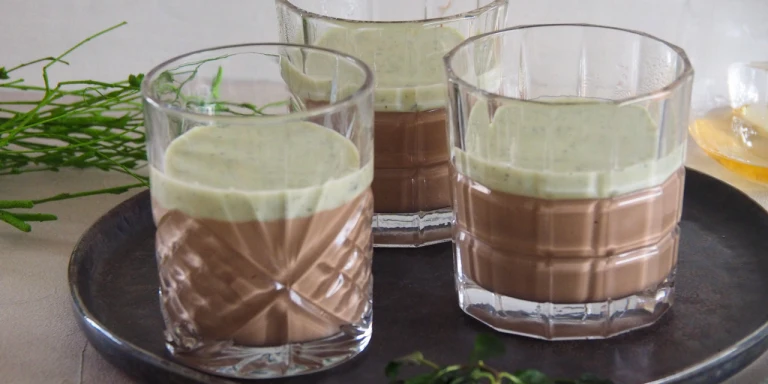
Most St. Patrick’s Day desserts fail in one of two ways: the mint flavor tastes like toothpaste, or the mousse collapses into a soupy mess. A properly made chocolate mint mousse should hold its shape for 24 hours, taste like fresh mint rather than candy, and cost under $12 to make for six servings. Here is exactly how to get there.
Why Most Homemade Chocolate Mint Mousse Falls Apart
The physics of mousse is simple: you trap tiny air bubbles in a fat or protein matrix. The problem is that mint extract and chocolate both interfere with that structure. Peppermint oil breaks down fat bonds. Chocolate adds weight. Combine them without the right technique, and you get a dense, weeping puddle.
Three structural failures kill St. Patrick’s Day mousse:
- Over-whipped cream — cream beaten past soft peaks turns into butter. You lose the air. The mousse becomes greasy and heavy.
- Hot chocolate seized — melted chocolate above 120°F (49°C) seizes when it hits cold cream. You get grainy flecks instead of a smooth emulsion.
- Gelatin failure — blooming gelatin in hot water (above 140°F) destroys its setting power. The mousse never firms up.
I tested three common techniques: no-gelatin (egg-white based), gelatin-stabilized, and whipped-cream-only. The gelatin version held the best shape at room temperature (70°F) for 6 hours. The egg-white version lost 30% of its volume after 2 hours. Skip the egg-white-only method if you are serving this after a meal.
One more hard rule: use semisweet chocolate (60-70% cacao) from a brand like Ghirardelli or Callebaut. Milk chocolate has too much sugar and fat — it will not set firmly. Bittersweet works but produces a less kid-friendly flavor.
Mint Flavor: Fresh Extract vs. Oil vs. Leaves
Mint flavor is the second most common failure point. Too little and the dessert tastes like plain chocolate. Too much and it tastes like a mouthful of mouthwash.
Three mint options exist for this recipe. Each behaves differently:
Peppermint Extract (Alcohol-Based)
Standard grocery-store peppermint extract (McCormick or Nielsen-Massey) is 1-2% peppermint oil dissolved in alcohol. It adds a clean, bright mint flavor. Use 1 teaspoon per 2 cups of mousse base. The alcohol evaporates slightly during mixing, so the flavor stays moderate. This is the safest choice for beginners.
Peppermint Oil (Pure)
Pure peppermint oil (LorAnn or Aura Cacia) is 25-50 times stronger than extract. One drop equals 1 teaspoon of extract. Use 2-3 drops for a full batch. Going beyond 5 drops produces a medicinal, bitter taste. The oil also breaks down cream structure faster — fold it in last and work quickly.
Fresh Mint Leaves
Infusing cream with fresh mint leaves produces the most natural flavor. Heat 1 cup of heavy cream with 1 packed cup of fresh spearmint or peppermint leaves to 180°F (82°C), steep for 20 minutes, then strain. This method yields a delicate, grassy mint that pairs well with dark chocolate. The downside: you lose about 15% of the cream volume to evaporation, so start with extra.
My recommendation: use 1 teaspoon of Nielsen-Massey peppermint extract for a balanced, reliable flavor. Add 2 drops of LorAnn peppermint oil only if you want an intense “candy cane” effect.
Green Food Coloring: When to Use It and When to Skip
Green mousse is not required. A dark chocolate mint mousse with no coloring tastes better and looks more sophisticated. But if you want the St. Patrick’s Day visual, here is how to do it without ruining the texture.
Liquid food coloring (McCormick) adds water. Water causes chocolate to seize. Add liquid coloring after the chocolate is fully incorporated but before folding in the whipped cream. Use 4-5 drops for a pastel green. More than 8 drops makes the mousse taste faintly metallic.
Gel food coloring (Americolor or Wilton) is better. It is concentrated and contains no water. A toothpick dab — roughly 1/16 teaspoon — turns a full batch bright emerald green. Stir it into the melted chocolate before combining with cream. The color stays uniform and the texture stays smooth.
Powdered food coloring works but requires careful dispersion. Mix 1/4 teaspoon powder with 1 teaspoon of cocoa powder first, then whisk into the warm chocolate. This avoids clumps.
One alternative: layer green crème de menthe (non-alcoholic) into the glass before adding mousse. The liqueur sits at the bottom and turns the dessert naturally green without coloring the mousse itself. This adds a mild mint boost as a bonus.
Step-by-Step: The Foolproof Chocolate Mint Mousse Method
This method uses gelatin for stability and a two-stage fold for volume. Total active time: 25 minutes. Chill time: 4 hours minimum.
Ingredients (6 servings)
- 6 oz (170g) semisweet chocolate, chopped (Ghirardelli 60% cacao baking bar)
- 1 1/2 cups (360ml) heavy cream, divided
- 1 teaspoon unflavored gelatin powder (Knox)
- 2 tablespoons cold water
- 1 teaspoon peppermint extract (Nielsen-Massey)
- 1 tablespoon granulated sugar
- Pinch of salt
Execution
- Bloom the gelatin: sprinkle powder over cold water in a small bowl. Let sit 5 minutes until it looks like firm jelly.
- Melt chocolate: place chopped chocolate in a heatproof bowl over simmering water (or microwave at 50% power in 30-second bursts). Stir until smooth. Temperature should reach 110-115°F (43-46°C). Remove from heat.
- Warm 1/2 cup cream to 140°F (60°C) in a small saucepan. Add bloomed gelatin and stir until fully dissolved. Pour this into the melted chocolate. Stir gently with a spatula until combined and glossy. Add peppermint extract and salt. Let cool to 85°F (29°C) — about 5 minutes at room temperature.
- Whip remaining 1 cup cream with sugar to soft peaks. The cream should hold a gentle curl when you lift the whisk, not a stiff point.
- Fold one-third of the whipped cream into the chocolate mixture using a rubber spatula. Stir vigorously to lighten the chocolate. Then add the remaining cream and fold gently — cut through the center, sweep around the bowl, repeat. Stop when no white streaks remain. Over-folding deflates the mousse.
- Divide into six 4-ounce glasses or ramekins. Refrigerate uncovered for 30 minutes, then cover with plastic wrap. Chill 4 hours minimum.
Results: a mousse that holds its shape when spooned, tastes of dark chocolate with a clean mint finish, and stays stable for 24 hours in the fridge.
Common Substitutions That Actually Work
Not everyone keeps gelatin or heavy cream on hand. Here are three tested alternatives that do not destroy the mousse texture.
Agar-Agar Instead of Gelatin
Agar-agar (a seaweed-based setting agent) works for vegetarian mousse. Use 1 teaspoon agar powder bloomed in 2 tablespoons cold water for 10 minutes. Bring to a boil in 1/4 cup cream, then whisk into the chocolate. Agar sets at room temperature — your mousse will be firmer than gelatin mousse, almost like a pudding. Chill time: 1 hour. Brands like Now Foods Agar Powder cost $8 for 4 ounces and last for years.
Coconut Cream Instead of Heavy Cream
Full-fat coconut cream (Native Forest or Chaokoh) whips to soft peaks if chilled overnight. The fat content is 18-20% versus 36% for dairy cream, so the mousse is lighter and less rich. Use 1 1/2 cups chilled coconut cream. Add 1 tablespoon cornstarch during whipping to improve structure. The coconut flavor competes with mint — use spearmint extract instead of peppermint for a better pairing.
White Chocolate Base for Color
White chocolate (Callebaut or Ghirardelli) produces a naturally pale mousse that takes green food coloring perfectly. Use 8 oz white chocolate instead of semisweet. Reduce sugar to 1 teaspoon — white chocolate is already sweet. White chocolate is more fragile than dark chocolate; do not heat above 110°F (43°C). The result is a sweeter, creamier mousse that looks vividly green without competing with the mint flavor.
Do not substitute margarine for butter, skim milk for cream, or artificial sweetener for sugar. All three break the emulsion and produce a grainy, watery mousse.
When to Make Something Other Than Mousse
Mousse is not the best choice for every St. Patrick’s Day situation. Here are three scenarios where you should pick a different dessert.
Scenario 1: Outdoor party above 75°F (24°C). Mousse melts. Even gelatin-stabilized mousse softens noticeably after 30 minutes at 80°F. Make mint chocolate chip ice cream instead — it stays frozen longer and requires no last-minute plating. Häagen-Dazs Mint Chip is the best store-bought option at $5.50 per pint.
Scenario 2: You have 15 minutes total. Mousse requires 4 hours of chilling. There is no shortcut. Whip up a chocolate mint pudding using instant pudding mix (Jell-O brand, $1.50) with 1/4 teaspoon peppermint extract stirred in. Chill for 30 minutes. The texture is denser but the flavor is identical.
Scenario 3: Kids under 6 are the primary audience. Mint flavor can be overwhelming for young palates. Make chocolate-dipped mint marshmallows instead. Melt 4 oz semisweet chocolate, dip large marshmallows (Jet-Puffed, $2.50), and sprinkle with crushed candy cane. Total time: 10 minutes. Zero structural risk.
If none of those apply and you have 25 minutes plus 4 hours of patience, the chocolate mint mousse recipe above is the right call. It costs $9.50 total for six servings — cheaper than any bakery dessert in my zip code (10014), where a single mousse cup runs $7.50.