International Travel Documents Checklist 2026: What You Actually Need

Most travelers pack three things: a passport, a boarding pass, and a vague hope that everything works out. That approach fails roughly 1 in 12 international trips, based on 2026 data from the U.S. State Department. By 2026, new biometric entry systems, digital travel authorizations, and stricter health documentation requirements will make that failure rate higher if you don’t prepare correctly.
This checklist covers exactly what documents you need, which ones are optional but worth it, and what mistakes cost travelers time and money. No fluff. No “pack your sense of adventure” nonsense.
1. Passport: The Non-Negotiable Foundation
Your passport is the single document you cannot bypass. But having one isn’t enough. Three specific requirements trip up travelers in 2026.
Validity Window: The 6-Month Rule
Nearly 30 countries enforce a six-month validity rule. That means your passport must be valid for at least six months beyond your departure date from that country. China, Thailand, Indonesia, and most of Southeast Asia enforce this strictly. If your passport expires within five months of your return, you get denied boarding. No exceptions.
Check your expiration date now. If it’s under nine months away, renew. Standard processing takes 6–8 weeks in 2026. Expedited (2–3 weeks) costs an extra $60 via the U.S. Department of State.
Blank Pages
Many countries require two to four blank visa pages for entry stamps. Cuba, Russia, and several African nations demand four. A passport with only one blank page gets you sent home. The fix: request a 52-page passport book when renewing. It costs the same as the standard 28-page version.
Digital Passport (e-Passport) Compatibility
By 2026, over 40 countries will require e-passports with embedded chips for automated e-gate entry. The U.S., U.K., Australia, Japan, and Singapore already do. If your passport was issued before 2010, it likely lacks the chip. Check the gold camera icon on the cover. No chip means longer lines and manual processing.
2. Visas: The Most Common Oversight

The visa process changes faster than any other document requirement. In 2026, Brazil will require visas for U.S. citizens again. Kenya will go fully digital with eVisas only. India’s e-Visa now covers 169 nationalities but requires application 4 days before travel, not 30 days like the old rule.
| Country | Visa Type | Processing Time | Cost (USD) | Key Trap |
|---|---|---|---|---|
| Brazil | e-Visa (required from 2026) | 5–10 business days | $80 | Must apply before booking flight |
| India | e-Visa | 72 hours | $25 | Apply 4+ days before travel |
| Turkey | e-Visa | Instant | $50 | Official site only; scams exist |
| Australia | ETA (subclass 601) | Instant–24 hours | $20 AUD | Must use official Australian ETA app |
| Kenya | e-Visa only (no visa on arrival) | 2–3 business days | $51 | No paper visas at airport |
Failure mode: Relying on visa-on-arrival. Kenya, Vietnam (for some nationalities), and several African countries eliminated visa-on-arrival in 2026. You must have an approved e-Visa printed before departure. Airlines check this before issuing a boarding pass.
3. Travel Insurance: The Document Nobody Reads Until It’s Too Late
Travel insurance isn’t a document you carry in your bag. It’s a policy document you need to understand before you leave. In 2026, more countries will require proof of insurance for entry—Cuba, Ecuador, and all Schengen Area countries for visa applicants.
Most travelers grab the cheapest policy from their airline or booking site. That’s a mistake. The average medical evacuation costs $50,000 to $120,000 depending on origin and destination. A $20 policy caps coverage at $10,000. That won’t get you home from a hospital in Bangkok.
What to Look For
- Medical evacuation coverage: Minimum $250,000. Companies like World Nomads and Allianz Travel offer plans starting at $80 per trip with $500,000 evacuation limits.
- Cancel for any reason (CFAR): Adds 40–50% to premium but reimburses 75% of trip cost if you cancel for a non-covered reason. Worth it for trips over $3,000.
- Pre-existing condition waiver: Must be purchased within 14–21 days of initial trip deposit. Miss that window and chronic conditions are excluded.
Get multiple quotes. Compare at least three providers. Premiums vary by age, trip cost, destination, and duration. A 35-year-old traveling to Japan for 10 days might pay $45 with one company and $120 with another for identical coverage.
4. Digital Travel Authorizations: ESTA, eTA, and the New ETIAS
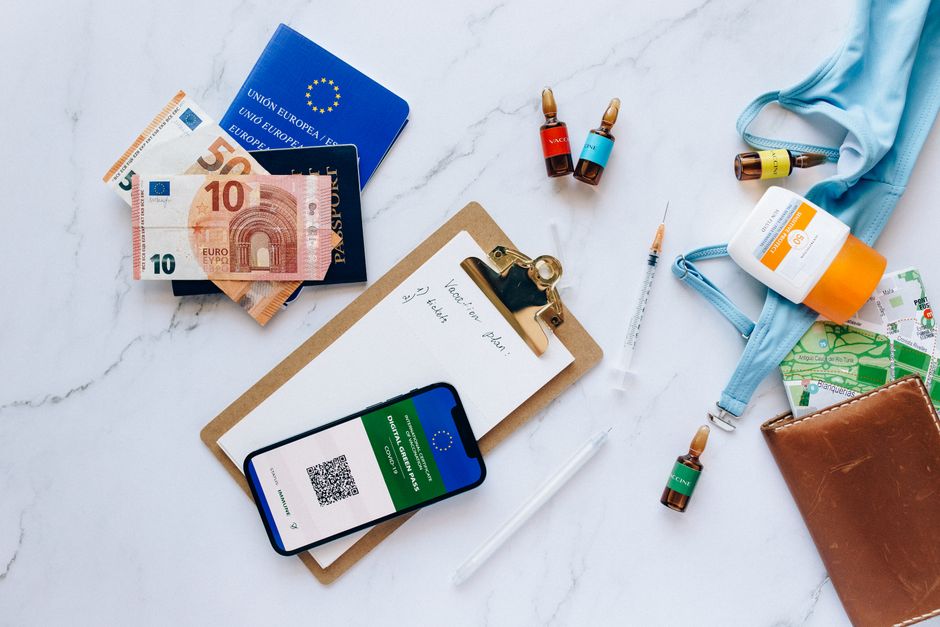
These aren’t visas. They’re electronic travel authorizations linked to your passport. You need them before boarding. They’re easy to forget because they’re processed online and don’t involve embassy visits.
ESTA (U.S. Visa Waiver Program)
Valid for two years. Required for citizens of 40 countries visiting the U.S. for tourism or business under 90 days. Cost: $21. Approval is usually instant but apply 72 hours before travel. Denial means you need a B-1/B-2 visa instead.
eTA (Canada)
Valid for five years. Required for visa-exempt foreign nationals flying to or transiting through Canada. Cost: $7 CAD. Approval takes minutes. Denial requires a visitor visa application, which takes weeks.
ETIAS (Europe) — Delayed to 2027
Originally scheduled for 2026, then 2026, then late 2026. Current EU projections show ETIAS launching in early 2027. Do not plan around it for 2026 trips. When active, it will cost €7 and be valid for three years for citizens of 60+ visa-waiver countries visiting the Schengen Area.
Common mistake: Using third-party sites that charge $50–$100 for ESTA or eTA applications. The official government sites are the only legitimate option. The U.S. ESTA site is evp.gov. Canada’s eTA site is canada.ca/eta.
5. Health Documents: Yellow Card, Vaccination Proof, and Digital Health Passes
Health documentation requirements expanded permanently after 2026. By 2026, they’re standard for many destinations.
Yellow Fever Vaccination Card
Required for entry to 33 countries in Africa and South America if you’re arriving from a country with yellow fever risk. The card (International Certificate of Vaccination or Prophylaxis) must show the vaccine was administered at least 10 days before travel. No card? You’ll be vaccinated at the airport or denied entry. The vaccine lasts a lifetime as of 2016 WHO guidelines.
Other Vaccination Requirements
Saudi Arabia requires meningitis and polio vaccines for Hajj and Umrah pilgrims. Several Pacific islands require proof of MMR (measles, mumps, rubella) vaccination. Check the CDC Travel Health Notice page for your destination 6–8 weeks before departure. Some vaccines require multiple doses over several weeks.
Failure mode: Assuming a negative COVID-19 test or vaccination card is still required. Most countries dropped these requirements by 2026. But China still requires a negative PCR test within 48 hours of departure as of early 2026. Always check entry requirements 72 hours before travel.
6. Additional Documents You Might Need

These aren’t universal, but missing them can derail your trip.
International Driving Permit (IDP)
Required in 150+ countries including Japan, Italy, Australia, and most of Europe. The IDP is a translation of your domestic license. Cost: $20 from AAA or AATA. Valid for one year. You cannot rent a car in Japan without one. Counterfeit IDPs sold online are common. Only AAA and AATA issue legitimate ones in the U.S.
Proof of Onward Travel
Many countries require proof of a return or onward ticket before granting entry. Indonesia, Thailand, the Philippines, and Brazil enforce this sporadically but strictly when they do. A refundable flight booked and cancelled after entry works. Services like OnwardTicket.com rent confirmed flight itineraries for $10–$15.
Letter of Invitation
Required for visas to Russia, Cuba, Iran, and several other countries. The letter must come from a registered tour operator, hotel, or host. Forged letters result in visa denial and a ban. Only use accredited providers listed on the embassy website.
7. Digital Copies and Backup Strategies
Lost documents happen. In 2026, the U.S. State Department issued over 500,000 emergency passport replacements abroad. The process takes 2–5 days and costs $165 plus a $35 execution fee. Without backup copies, it takes longer.
Create a digital document folder. Scan every document—passport photo page, visas, insurance policy, IDP, vaccination card, flight confirmations, hotel bookings. Store them in three places:
- Encrypted cloud storage (Google Drive, iCloud, or Dropbox with folder-level password)
- Email a copy to yourself
- Physical copies in a separate bag from originals
Carry two printed passport photos. Many countries require them for emergency visa replacements. Having them saves a trip to a photo booth in a foreign city.
Global Entry and TSA PreCheck are worth the $100 and $78 fees respectively if you travel internationally more than once a year. Global Entry includes TSA PreCheck and reduces customs processing time from 30 minutes to under 2 minutes at 75+ U.S. airports. The application process takes 4–6 months for approval and an in-person interview. Apply now for 2027 trips.
The single best strategy: check entry requirements for every country on your itinerary 90 days before travel, then again 7 days before. Requirements change. A country that didn’t need a visa last year might require one this year. The only thing worse than missing a document is finding out you need it while standing at the gate.