A Delicious Blood Orange Cake To Make While They Are In Season
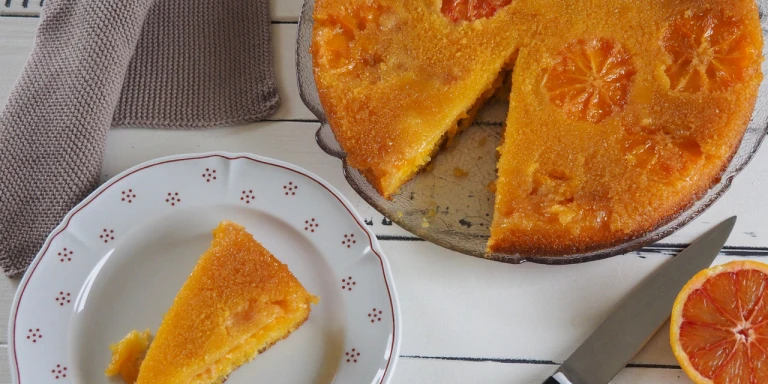
Blood oranges are not a novelty fruit with a color gimmick. That misconception is worth clearing up before anything else. Many home bakers treat them as decorative — something to photograph before squeezing into a generic citrus cake. But Moro and Tarocco blood oranges carry a flavor profile that is genuinely distinct from navel oranges: less sweet, more acidic, with what food scientists typically describe as anthocyanin-driven berry undertones. Substitute a regular orange and you will produce a citrus cake. You will not produce a blood orange cake.
The window to make this correctly is short. Blood orange season in the United States typically runs from late December through March, with January and February representing peak quality and availability. After that, most supplies come from cold storage, and the flavor degrades accordingly.
This guide covers when to buy, what to look for, how to bake a blood orange olive oil cake that reliably works, and what goes wrong when it doesn’t.
When Blood Oranges Are Actually in Season — and Where to Find Them
California grows the bulk of the domestic blood orange supply, primarily in the San Joaquin Valley. Texas and Arizona produce smaller amounts. Across most of the continental US, these oranges arrive in produce sections in late December, peak through January and February, and are largely gone from shelves by mid-March.
European varieties — the Sicilian Moro and Tarocco in particular — follow a similar seasonal arc. If you have traveled through Italy, Spain, or southern France in January or February, you have probably seen pyramids of blood oranges stacked at outdoor markets and supermarkets alike. In Sicily, the originating region for most high-quality blood orange cultivation, the fruit moves from tree to market in days rather than weeks. That harvest-to-shelf speed produces a noticeably better product: more juice, more color, more of those berry notes that make the whole variety worthwhile. It is, incidentally, one of the more compelling food-specific reasons to schedule winter travel in that part of the Mediterranean.
In the US, Whole Foods and Trader Joe’s typically carry blood oranges through February. Specialty Italian delis, farm boxes, and farmers markets in citrus-growing states are worth checking for better quality at comparable prices. After February, expect to pay a steep premium for imports — and expect diminishing flavor returns. The anthocyanins that create the color and the berry notes degrade in cold storage. A blood orange bought in May looks almost identical to one bought in January, but it performs very differently in a glaze.
Three Blood Orange Varieties and What They Mean for Baking
Moro is the darkest and most assertive variety. Deep crimson flesh, pronounced tartness, and the highest anthocyanin concentration of the three main types. If you want a cake glaze that turns genuinely pink to magenta, Moro is the variety to prioritize. The flavor can read as almost aggressively tart to some palates, which is why the full cup of sugar in the recipe below matters — don’t reduce it when working with Moro.
Tarocco comes from Sicily and is widely regarded as the finest blood orange for eating out of hand. Lighter flesh color, sweeter flavor, more nuanced aromatics. In a cake, Tarocco produces a softer, more balanced result and a glaze that lands in the pink-to-peach range rather than deep magenta. Bakers who find Moro too sharp typically report better results with Tarocco.
Sanguinello is the third common variety, also Sicilian, and less frequently found in US specialty markets. Moderate sweetness, medium color, reliable flavor. A solid fallback when Moro or Tarocco aren’t available, and occasionally more affordable.
How to Select Blood Oranges at the Market
Weight tells you more than appearance. A blood orange that feels heavy for its size has more juice — which is what you actually need for baking. Skin color is an unreliable indicator because blood orange redness develops partly in response to cold overnight temperatures during growing; skin pigmentation doesn’t consistently predict flesh pigmentation.
Check for firmness. Blood oranges soften and begin to ferment faster than navels. Any soft spots or a faint fermented smell means the fruit is past its best for baking. Buy within a week of when you plan to use them. Store at room temperature if using within three days; refrigerate if you need more time, but bring them back to room temperature before zesting and juicing.
The Blood Orange Olive Oil Cake: Full Recipe with Exact Quantities
Olive oil is the correct fat for this cake. Butter-based cakes are excellent for many applications, but dairy richness tends to compete with delicate citrus flavors rather than support them. Olive oil allows the fruit to come forward cleanly. This is consistent with how most traditional Italian citrus cakes are constructed — whether in Sicilian bakeries, Ligurian kitchens, or Sardinian homes — olive oil rather than butter is the norm, and for good reason.
This recipe works in a standard 9-inch round cake pan or a Nordic Ware Bundt pan. The Bundt version is recommended for presentation: more surface area means more glaze coverage, better visual drama, and a result that reads as intentional rather than improvised. Expect a bake time of 35–40 minutes in a conventional home oven at 350°F.
Ingredients for One 9-Inch Cake
- 3 medium blood oranges (Moro preferred for maximum color; Tarocco acceptable)
- 3 large eggs, room temperature
- 1 cup (200g) granulated sugar
- ½ cup (120ml) extra-virgin olive oil — mild and fruity, not intensely grassy
- ½ cup (120g) whole-milk Greek yogurt or crème fraîche
- 1½ cups (190g) King Arthur all-purpose flour
- 2 tsp baking powder
- ½ tsp fine kosher salt
- ¼ tsp ground cardamom (optional — amplifies the berry notes without being identifiable as a distinct spice)
For the glaze: 3 tbsp reserved blood orange juice whisked with 1 cup (120g) sifted powdered sugar. Add juice gradually to control consistency.
Essential equipment: a Microplane zester. Not a box grater. The Microplane produces finer zest, releases more essential oil from the peel, and avoids pulling in the bitter white pith. A kitchen scale is also worth using for the flour; cup measurements vary too much by how densely the flour is packed to be relied upon here.
Method, Step by Step
Preheat to 350°F (175°C). Grease and flour the pan thoroughly, or use a baking spray that contains flour. For a Bundt pan, coat every crevice — stuck cake is a waste of good fruit.
Zest all three oranges before cutting them open. You want approximately 2 tablespoons of finely grated zest. Then juice two of the oranges, aiming for ½ cup of juice. Reserve the juice from the third orange — roughly 3 tablespoons — for the glaze.
In a large bowl, whisk the eggs and sugar together for about 2 minutes, until the mixture lightens and thickens slightly. Add the olive oil and whisk to combine. Add the Greek yogurt, blood orange juice, and all of the zest, then whisk until smooth and uniform.
In a separate bowl, stir together the flour, baking powder, salt, and cardamom if using. Add the dry ingredients to the wet in two additions, folding with a rubber spatula after each addition. Stop folding the moment dry streaks disappear. A few faint flour traces are acceptable — they will hydrate in the oven. This is the most technically important step in the recipe: overmixing develops gluten and produces a cake that is dense and slightly chewy rather than tender and open-crumbed. Once gluten strands form, no amount of resting or baking reverses the damage.
Pour into the pan, level the surface, and bake for 35–40 minutes. The cake is done when a toothpick inserted in the center comes out clean and the edges have begun to pull away from the pan sides. Cool in the pan for 10 minutes, then invert onto a wire rack and cool fully before glazing — a minimum of 45 minutes.
For the glaze: whisk the reserved juice into the sifted powdered sugar until smooth and pourable. Drizzle over the fully cooled cake. Depending on variety, the glaze will range from pale pink with Tarocco to deep magenta with Moro. Both results are correct.
Four Mistakes That Produce a Disappointing Result
The following errors account for the majority of failed blood orange cakes. All four are preventable.
- Buying out-of-season blood oranges. Cold-stored blood oranges from April through November have significantly degraded anthocyanin content. The glaze will be nearly white, the flavor generic, and the juice yield lower than the recipe assumes. If you see blood oranges at a supermarket in summer, they are technically edible but not worth baking with if color and flavor are the point. The seasonal constraint is not a suggestion — it is the entire basis of the recipe’s appeal.
- Using juice but skipping the zest. Blood orange juice provides moisture and tartness. The zest provides the essential oils that contain the berry-citrus aromatics that set this variety apart. A cake made with juice but no zest tastes like a citrus cake. Not specifically like a blood orange cake. The zest step adds two minutes and changes the flavor substantially enough to matter.
- Overmixing the batter after adding flour. Fold, don’t whisk. Thirty to forty seconds of gentle folding is sufficient once the last flour addition goes in. Most home bakers mix for twice as long as needed, then wonder why the crumb is tight and rubbery. If the batter is perfectly smooth with no traces of flour, it has likely been overmixed — and there is no corrective technique at that point.
- Glazing a warm cake. A warm surface absorbs glaze rather than holding it on top. The visual contrast disappears, the sugar crust doesn’t develop, and the dramatic color effect is lost entirely. The bottom of the pan should feel cool to the touch before you pour. At room temperature — around 65–70°F — the glaze will set in roughly 20 minutes.
Blood Orange vs. Navel Orange in Baking: What Actually Changes
The substitution question comes up often enough to warrant a direct answer. Yes, you can use navel oranges. No, it is not the same cake. The differences are significant across flavor, color, sugar balance, and visual impact.
| Factor | Blood Orange (Moro) | Navel Orange |
|---|---|---|
| Flavor profile | Tart, berry-forward, complex | Sweet, bright, straightforwardly citrusy |
| Juice yield per fruit | 3–4 tbsp per medium orange | 4–5 tbsp per medium orange |
| Glaze color | Deep pink to magenta | Pale yellow to near-white |
| Sugar adjustment | 1 cup needed (tarter fruit) | ¾ cup often sufficient |
| Peak US season | January–February | November–January |
| Retail price | $3–5 per pound in season | $1–2 per pound year-round |
| Visual impact in baked goods | High — pink/red glaze, occasionally tinted crumb | Low — pale throughout |
One substitution to explicitly avoid: Cara Cara oranges. They look similar to blood oranges from the outside, but the flesh is pink-orange rather than red and the flavor is sweeter, with no berry undertones. You lose both the color payoff and the flavor complexity in a single swap. If blood oranges genuinely aren’t available and you still want an orange cake, use the best navels you can find, reduce the sugar to ¾ cup, and understand that you are making a different cake — a good one, but a different one.
For travel-minded bakers who have returned from Sicily or the Valencian coast with blood oranges in checked luggage: US Customs allows fresh citrus with proper agricultural declaration. Sicilian Tarocco oranges brought home from a January trip will typically outperform domestic varieties in freshness and flavor, though the difference narrows once both have been sitting at room temperature for more than a week.
The Verdict
Buy Moro blood oranges in January or February. Use a Nordic Ware Bundt pan, King Arthur all-purpose flour, and a Microplane zester. Don’t overmix, don’t glaze warm, and don’t skip the zest. Those five choices, made correctly, produce a cake that is worth making. Outside of peak blood orange season, the technique remains sound. The ingredient does not.
- Best variety for color and intensity: Moro — deep magenta glaze, most assertive flavor
- Best variety for sweetness and balance: Tarocco — softer glaze color, more nuanced taste
- Best pan: Nordic Ware Bundt — maximum glaze surface, stronger visual result
- Flour: King Arthur all-purpose — consistent protein content, reliable crumb structure
- Zester: Microplane — finer zest, more essential oil released from the peel
- Season: January–February in the US — outside this window, quality declines sharply
This is not professional pastry advice. Consult a trained chef or registered dietitian for allergen-sensitive, commercial, or medically restricted dietary applications.